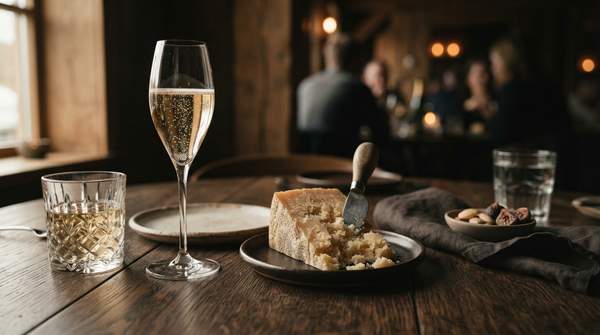
The best food-and-drink pairings don't follow rules; they follow sensory logic. Champagne with Thai food? Añejo tequila with dark chocolate? Gin with raw oysters? Each sounds like a mistake until you notice what the two sides share, offset, or bridge. I've spent enough time puzzling over odd matches to know that the strange ones usually succeed for one of three reasons: the flavors complement each other, they contrast productively, or an aroma in the drink bridges directly to a quality in the food. Below is that simple framework—complement, contrast, and bridge—plus three expert-backed examples that prove the point, so you can start decoding pairings on your own instead of memorizing lists.
Unconventional Pairings: A Sensory Framework
Here's the mental toolkit in a nutshell. Complement means the food and drink share flavor notes—sweet with sweet, citrus with citrus—so they amplify each other rather than compete. Contrast means one side's character offsets the other: smokiness against sweetness, salt against bitterness, brightness against weight. Bridge is the subtlest of the three: an ingredient or aroma in the drink echoes a specific quality in the food, linking them through a shared sensory thread even when the two seem unrelated on paper. Most great unconventional pairings lean on one principle primarily while a second quietly assists.
The table below categorizes each featured pairing by the primary sensory interaction that explains its success. Read the component columns first, then the principle column, and you'll see the logic emerge: in every case, something in the glass finds a partner on the plate.
| Pairing (Food + Drink) | Key Food Components | Key Drink Components | The Unifying Principle |
|---|---|---|---|
| Champagne with Thai food | Ginger, lemongrass, and citrus notes | Citrus notes | Complement — shared ginger, lemongrass, and citrus notes in both combine to tasty effect |
| Dark chocolate with Añejo Tequila | Sweet, salty, and bitter notes of complex chocolate | Slightly smoky, toasty flavor; inherent sweetness and caramel notes from barrel aging | Contrast plus complement — the smoky, toasty tequila plays against and loves the chocolate's sweet, salty, bitter profile |
| Oysters with gin | Vegetal, oceanic, briny qualities of fresh bivalves | Herbal and citrus botanicals; juniper's piney, resinous notes | Bridge — gin's botanicals echo the oyster's vegetal character while citrus brightens like a squeeze of lemon |
One caveat before we dig in: these pairings come from expert suggestions in culinary publications, not from original testing or laboratory research. The explanations stay at the level of accessible sensory concepts—shared notes, echoes, offsets—rather than molecular chemistry. That's a feature, not a limitation: it means you can apply the same reasoning at your own table tonight.
Champagne with Thai Food: A Dance of Brightness
This is the classic "wait, really?" pairing, and CNN's roundup of unusual food-and-drink duos singles it out as "surprising but delicious." The reason is pure complement. Thai cooking carries bright notes of ginger, lemongrass, and citrus, and Champagne itself shows citrus character. Put the two together and those shared aromatics meet in the middle, each reinforcing the other rather than fighting for attention. In CNN's phrasing, the "notes of ginger, lemongrass and citrus in both combine to tasty effect."
What makes this pairing feel unconventional is our training. We're taught to think of sparkling wine as a toasty, celebratory sip for mild foods—oysters, canapés, brunch—not as a partner for assertive, aromatic cuisine. But the overlap in flavor notes means neither side overwhelms the other. The Champagne's citrus lifts the dish's aromatics instead of burying them, and the dish gives the wine's brightness somewhere to land. Nothing clashes, because there's no competing note to clash with.
When you evaluate your own pairings, this is the first question to ask: what aromatics do both sides already share? If you can name at least one—citrus with citrus, herb with herb—you likely have a complement on your hands, and the pairing is safer than it looks. The description of Thai cuisine here is based on the general characteristics the source mentions, not an exhaustive catalog of the cuisine, but the principle holds: find the overlap, and the strangeness dissolves.
Añejo Tequila and Dark Chocolate: Richness and Contrast
Bon Appétit's feature on daring pairings describes dark chocolate as lovely on its own but capable of "pure bliss" alongside the right drink—and the most surprising partner it names is barrel-aged Añejo Tequila. The mechanism is twofold. The tequila's slightly smoky, toasty character contrasts with the chocolate, while its inherent sweetness and caramel notes complement the chocolate's own sweet side. In the article's words, that toasty tequila flavor "loves the sweet, salty, and bitter notes found in this complex chocolate."
Notice that the pairing works because of the chocolate's complexity, not despite it. A one-note sweet milk chocolate gives the tequila nothing to push against. It's the salty and bitter edges that give the smoky spirit something to play off, and the tequila's caramel notes give the chocolate a complementary echo in return. Contrast and complement are working together here—the contrast creates the excitement, the complement keeps it from feeling like a fight.
Bon Appétit even suggests serving this combination as a dinner-party dessert, which tells you how presentable the pairing is despite its strangeness. The takeaway for your own experiments: look for a drink that can both echo and offset a food's dominant notes. If the food is sweet, salty, and bitter all at once, reach for something with its own sweetness plus a contrasting edge—smoke, toast, spice—and you'll reproduce this dynamic.
Oysters and Gin: Bridging the Briny and Botanical
Oysters usually arrive at the table with Champagne or vodka, but the Oyster Tasting Guide makes a detailed case for gin as the more interesting match—and its explanation is the clearest illustration of the bridge principle anywhere in this article. Gin's herbal notes "echo the vegetal, oceanic qualities found in fresh bivalves," while its citrus botanicals "provide the same brightening effect as a squeeze of lemon." That's a bridge doing double duty: one botanical echoes the oyster's character, another replicates the classic accompaniment.
The pairing hinges on gin not masking the oyster. Juniper's piney, resinous notes "sit alongside the oyster's brine rather than masking it," according to the guide, which finds juniper-forward London Dry gins particularly good with the sea-salt freshness of raw oysters. The spirit is also clean and crisp enough, the site notes, to let the oyster itself come through—gin and vodka are, in its assessment, the easiest spirits to pair for exactly that reason.
That last point deserves emphasis, because it's the hidden rule behind every bridge: the drink must stay transparent enough to let the food speak. A heavy, oaky spirit would steamroll a raw oyster no matter how clever the botanical echo. When you're hunting for bridges in your own pairings, look for a shared aroma first—herbal with vegetal, citrus with brine—but then check that the drink's body won't smother the food. A bridge only works if you can still see across it.
Your Next Flavor Adventure: Experiment with Confidence
None of this is original lab science—it's expert suggestion and sensory reasoning from the sources above, offered as a framework rather than an exhaustive rulebook, and without recipes or complete lists of possibilities. So here's the decision: the next time a pairing sounds wrong, don't dismiss it—deconstruct it. Ask which of the three principles is doing the work. Is there a shared aromatic, the way Champagne's citrus meets Thai ginger and lemongrass? A contrast that resolves tension, the way smoky, toasty tequila plays against salty-bitter chocolate? A bridging echo, the way juniper and citrus sit alongside oceanic brine?
The measurable indicator of success is simple: can you correctly name the sensory principle behind an unexpected pairing you try—whether it's one of these three or something you invent yourself? If you can say "this works because the notes complement each other," "this works because the smokiness cuts the sweetness," or "this works because the herbal notes bridge to the food's vegetal side," you've internalized the framework. Start with the pairings above, then experiment with your own.