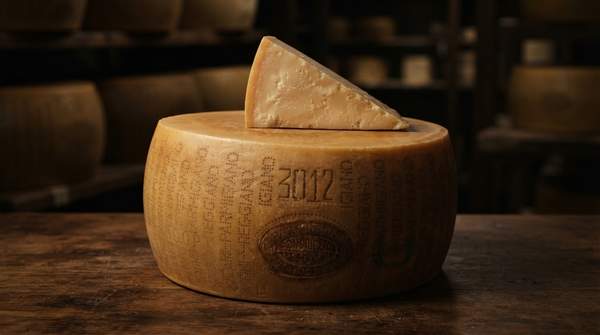
The rich, nutty, and complex character of authentic Parmigiano-Reggiano is no accident. It is the direct result of terroir, a concept signifying that a food's unique qualities are inextricably linked to its specific place of origin. For Parmigiano-Reggiano, this connection is so vital that it is enshrined in law through a Protected Designation of Origin (PDO). This legal framework dictates every step of production, from the precise fields where cows graze to the minimum time the cheese must age, ensuring that each wheel is a genuine expression of its Italian homeland.
Parmigiano-Reggiano Terroir: From Region to Rind
The distinct sensory profile of Parmigiano-Reggiano can be traced back to four fundamental components of its terroir, each governed by strict production regulations. Understanding these pillars reveals how the environment, animal diet, traditional methods, and the passage of time collaborate to create the cheese's unmistakable taste, texture, and aroma.
Geographic Area
True Parmigiano-Reggiano can only be produced in a legally defined area of Northern Italy. This zone encompasses the provinces of Parma, Reggio Emilia, and Modena, as well as parts of Bologna to the left of the Reno river and Mantua to the right of the Po river. According to a report from Kitchn, this specific environment, with its unique soil and climate, is essential because it dictates the growth of the local flora. The very grass and hay that the cows consume can only be grown there, making the region's geography the foundational element of the cheese's flavor.
Cow Breed and Diet
The diet of the dairy cows is rigorously controlled. The animals must be fed exclusively on local forage, with a required percentage of fresh grass and hay sourced from within the designated geographic zone. This regulated diet, as described by food writer John Antonelli, is directly responsible for the milk's unique characteristics, which in turn produce a cheese with a rich, nutty, and slightly fruity flavor. The fertile Po Valley, with its rich soil and temperate climate, allows these grasses to thrive, imbuing the milk with a profile that cannot be replicated elsewhere.
Production Method
The cheesemaking process itself is an exercise in tradition. Parmigiano-Reggiano is made using artisanal and natural methods that have been honed for centuries. Production regulations stipulate the use of raw milk—a combination of skimmed evening milk and whole morning milk—and forbid the use of any additives. This adherence to a pure, traditional recipe, upheld by a governing consortium, ensures that the final product is a direct reflection of the quality of its raw ingredients and the craft of the cheesemaker, rather than industrial processes.
Aging Process
Maturation is the final, transformative stage where Parmigiano-Reggiano develops its most celebrated characteristics. As the cheese ages, its texture evolves, becoming more granular and crumbly. This process also concentrates its flavor and aroma, deepening its characteristic umami, or savory taste. During this time, small, crunchy white dots may appear on the surface of the cheese. According to the official Parmigiano Reggiano consortium, these are tyrosine crystals, an indicator of the cheese's maturation stage. The longer the aging, which can range from 12 to over 72 months, the more pronounced these textures and flavors become.