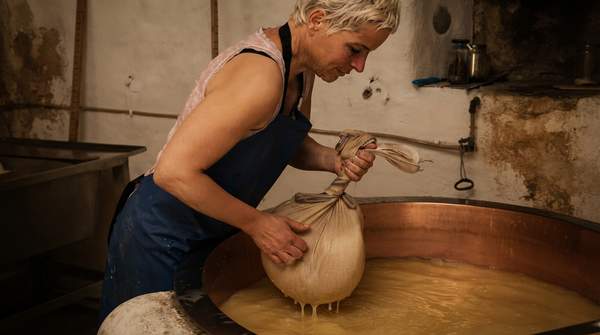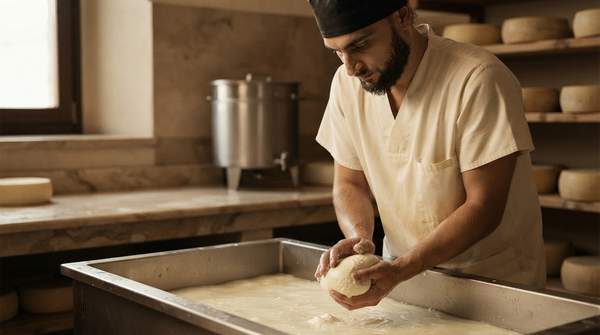
Artisanal cheese is made in small batches with hands-on control and an emphasis on flavor expression driven by milk quality and time-honored technique—so the cheesemaking process itself ends long before the cheese reaches your plate. Between the vat and the counter stand three distinct professions that are, as one Roquefort producer puts it, "often confused, yet they are different jobs." The cheesemaker turns milk into curd in a dairy; the affineur raises young cheese to maturity in caves and cellars; the cheesemonger selects, cuts, advises and sells in a shop or market. Here is how those careers differ, and how they depend on one another.
Introduction: The Artisanal Cheese Journey
At its core, artisan cheese begins with selected milk—cow, goat or sheep—plus starter cultures and rennet, all shaped by the cheesemaker's choices about curd handling, salting and aging. But the product that finally carries a premium price is not simply made; it is matured and then sold, each stage by specialists with their own environment and expertise. Maison Carles, a Roquefort house whose family has worked the same cave since 1927, offers a blunt guide to who does what: the cheesemaker works in a dairy, the affineur in caves, the cheesemonger in the shop. In small houses these roles often overlap; in larger artisanal operations, they split into distinct career paths.