When I first stood in a professional pastry kitchen, I assumed "pastry chef" described one craft. It actually describes a family of them. A boulanger coaxes bread from flour, water, and yeast; a confiseur spins sugar into candies and petits fours; a glacier builds frozen desserts; a chocolatier tempers cacao into bonbons and truffles; and a décorateur turns cake into show pieces. Each title carries its own products, its own responsibilities, and its own hard-won techniques—and understanding those distinctions is the first step toward appreciating, or choosing, this work.
The Foundational Artistry of Pastry Chefs
Before the specializations diverge, they share a common spine. The Culinary Institute of America describes pastry work as a balance of artistry and science, demanding precision, flavor pairing, decoration, and presentation—skills that distinguish the pastry chef from the more general baker, whose world revolves around fermentation, dough development, and baking consistency. The Pastry Chefs of America echo this, noting that the role requires "a balance of artistry and science, ensuring that each dessert is not only delicious but visually captivating," alongside time management, leadership, and passion. The CIA's baking and pastry education emphasizes mastery of doughs, batters, and leavening agents, plus an advanced understanding of the techniques, times, and temperatures behind breads, cakes, and pastries. What separates one specialist from the next is which of these fundamentals becomes an obsession.
Boulanger: The Master of Leavened Doughs
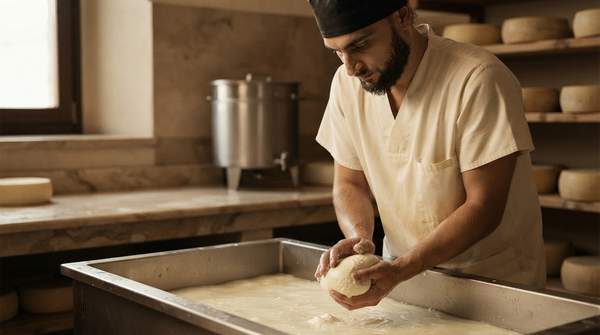
The boulanger is the baker of the pastry world, and the craft is anything but simple. The CIA's career comparison places the baker's primary focus on breads and yeasted products—baguettes, rolls, bagels, doughnuts—with an ingredient palette of flour, water, yeast, and sourdough cultures. A Japanese culinary school column from Yamanote describes the boulanger as someone who bakes bread that is fragrant and good in texture "while carefully monitoring the fermentation and baking process." That monitoring is the heart of the job: fermentation is a living process, and the baker's skill lies in reading it. The Pastry Chefs of America list the boulanger as responsible for breads, cakes, and breakfast pastries, but the defining thread is yeast—every signature product relies on leavening, and the craft lives in texture, rise, and crust.
Confiseur: The Artisan of Sugar Confections
Where the boulanger works with living cultures, the confiseur works with crystallizing sugar. Both the Pastry Chefs of America and the classic kitchen-station hierarchy describe the confiseur as the confectioner responsible for candies and petits fours. Yamanote's column defines the role more expansively: an artisan who specializes in making candies, caramels, and confectionery using sugar. The defining material is sugar itself, and the defining skills are sugar work and tempering—the precise control that keeps a caramel smooth rather than grainy, a candy stable rather than weeping. The scope is broader than a chocolatier's: sugar confections may include some chocolate work, but the confiseur's kingdom is the whole spectrum of sugar-based sweets, characterized by their sugar content and often intricate preparation.
Glacier: The Creator of Frozen Delights
The glacier is the specialist of cold and frozen desserts—ice cream, sorbet, gelato—according to both the Pastry Chefs of America and the kitchen-station tradition, which assigns the glacier responsibility for cold and frozen desserts. What defines the craft is the battle with temperature and texture. Frozen desserts demand their own preparation techniques: balancing a base so it freezes silky rather than icy, and controlling temperature through churning and storage. It is a specialization where the science of the shared pastry foundation becomes especially visible—timing and temperature, the same fundamentals the CIA identifies across baking and pastry education, are applied to a completely different medium, one that must be served cold and hold its structure against melt.
Chocolatier: The Specialist of Cacao
The chocolatier narrows the confiseur's world to a single, demanding ingredient. The CIA describes chocolatiers as "craftspersons of cacao" who work exclusively with chocolate, creating bonbons, truffles, molded figures, and decorative pieces through precise tempering and flavor pairing skills. Tempering is the signature technique—cooled and heated so the cocoa butter sets with gloss and snap—and it is what separates a chocolatier from a confectioner who merely uses chocolate among other ingredients. Yamanote's column likewise names the chocolatier as the professional who deals in chocolate confectionery. The distinction matters: a confiseur's sugar work may touch chocolate, but the chocolatier's entire practice is built on mastering chocolate's unique properties.
Décorateur: The Artist of Edible Presentation
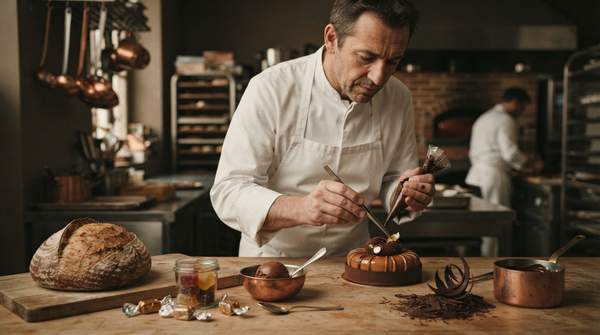
Every specialization produces something delicious; the décorateur specializes in making it beautiful. The Pastry Chefs of America and the kitchen-station hierarchy both assign the décorateur responsibility for specialty cakes and show pieces. This is where the pastry arts' artistic side concentrates: the CIA describes cake decorating as a confectionary art involving piping, leveling, layering, and styling cakes using icing, fondant, and other decorative techniques for professional finishes. The décorateur's material is presentation itself—edible sculpture for weddings, celebrations, and competition. Where the boulanger's creativity lives in flavor and shaping, the décorateur's lives in visual design, and the show piece is the proof of the craft.
Comparative Guide to Pastry Chef Specializations
The table below draws the five specializations side by side, using the professional definitions gathered from culinary institutions and organizations. Read a row across to see how one specialist's products and responsibilities connect; read a column down to see how differently each craft defines "pastry."
| Specialization | Primary Focus / Products | Key Responsibilities |
|---|---|---|
| Boulanger | Breads and yeast-leavened products: baguettes, rolls, breakfast pastries | Monitoring fermentation and baking; dough development; achieving texture, rise, and crust |
| Confiseur | Candies, caramels, petits fours, and other sugar-based confections | Sugar work and tempering; creating stable, intricate confections |
| Glacier | Cold and frozen desserts: ice cream, sorbet, gelato | Temperature and texture control through frozen-dessert preparation techniques |
| Chocolatier | Chocolate confectionery: bonbons, truffles, molded and decorative pieces | Working exclusively with cacao; precise tempering and flavor pairing |
| Décorateur | Specialty cakes and show pieces | Piping, leveling, layering, and styling with icing and fondant for artistic finishes |
Two boundaries in this comparison deserve emphasis. The confiseur and chocolatier overlap in material—both may handle chocolate—but the chocolatier's scope is exclusively cacao, while the confiseur's spans the wider world of sugar. And the boulanger stands somewhat apart from the rest: the CIA frames the baker's craft as high-volume and fermentation-driven, while pastry specializations lean toward smaller batches, precision, and visual detail.
Navigating the Diverse World of Pastry Arts
So where does an aspiring professional begin? Not with a job title, but with an ingredient or a technique that fascinates you. A CIA pastry instructor put it plainly: "It's rare to find a pastry chef that excels in every area. There's so many different avenues to go down in this career. You can choose to just focus on chocolates. You can choose to go the bakery route and work with tarts and cakes. Or you can be a restaurant pastry chef." The specializations exist precisely because each demands a depth of mastery that a single career rarely spans.
Aspiring pastry professionals should identify their passion for specific ingredients or techniques—yeast, sugar, chocolate, frozen elements, or artistic presentation—to choose a specialized career path. The measurable indicator that you've grasped this world is simple: a clear understanding of the distinct product categories and skill sets associated with each specialization, as evidenced by the ability to correctly categorize examples—knowing at a glance that a baguette belongs to the boulanger, a caramel to the confiseur, a bonbon to the chocolatier, a sorbet to the glacier, and a show piece to the décorateur.
Sources
- Pastry Chef — Pastrychefsofamerica
- 5 Steps to Become a Pastry Chef — Culinary Institute of America
- Baker vs Pastry Chef: Key Differences — Culinary Institute of America
- パティシエとは?仕事内容から必要な資格、ブーランジェやショコラティエとの違いまで解説 | 食のプロへ!調理・製菓の世界がわかるお役立ちコラム|YAMANOTE(山手調理製菓/東京山手調理師) — EN