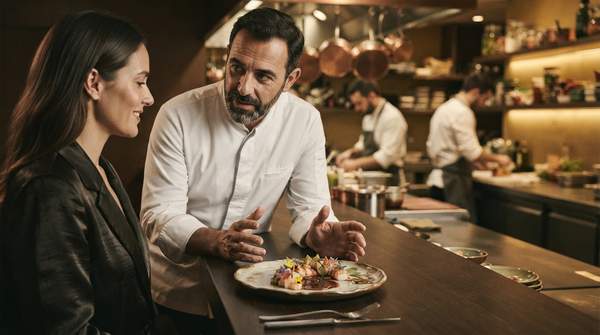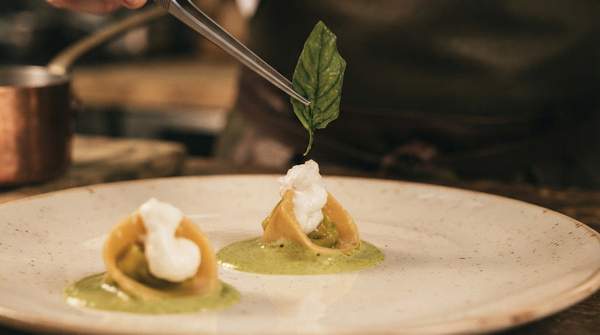
Professional critics do not simply report whether they enjoyed dinner. Sociologist Gillian Gualtieri's research on restaurant criticism, summarized by Laura Clawson at JSTOR Daily, found that reviewers rely on three distinct "logics of evaluation"—technique, creativity, and authenticity—and that the logic a critic applies depends heavily on what kind of restaurant sits on the table. For a diner who wants to move beyond "I liked it" or "I didn't," the practical first step is identifying which lens the restaurant itself invites, then judging the food against that standard rather than against personal mood or a single evening's luck.
Beyond Personal Taste: The Professional Approach to Restaurant Reviewing
The most common mistake in amateur reviewing is confusing an experience with a verdict. Chef Sam Gowing, who writes from the perspective of having owned restaurants and later served as a restaurant judge, draws a sharp line between the two. A guest may have had an outstanding or disappointing evening for reasons that say little about the kitchen: the table location, a delayed course during a busy service, personal expectations, or simply the mood they arrived in. A professional reviewer, by contrast, aims to assess the restaurant against recognized standards, separating personal preference from objective evaluation.
That separation is harder than it sounds, because a restaurant is what Gowing calls "a living, breathing business." One service rarely tells the whole story. A critic's job is to filter out the noise of a single night and ask what the restaurant is attempting, and how well it executes against the standards of its genre. This is why professional critique can involve multiple visits and why a single bad evening—an overbooked dining room, a distracted server—does not, on its own, constitute a fair review.
For the everyday diner, the takeaway is a shift in the unit of analysis. Instead of asking "did I have a good time?", the professional question is "what is this restaurant trying to do, and by what standard should that attempt be judged?" Gualtieri's research gives that question a concrete answer: the standard itself changes with the type of restaurant. A classic French dining room, a flexible contemporary kitchen, and a neighborhood spot serving a cuisine not traditionally represented in fine dining are not all measured with the same ruler.
Two honest limits apply before going further. This framework, drawn from sociological research on criticism, is not a comprehensive checklist—it does not score wine lists, decor, or specific service steps, and it offers no rating system. And the research's own terminology, particularly its category of "ethnic restaurants," carries complications that the critics and chefs in the study themselves flagged, which we address below.
Applying the Framework: Matching Logics to Restaurant Genres
Gualtieri's central finding is that the three logics are not applied uniformly. Classic restaurants—think of traditional French or Italian fine dining—are judged primarily on technique: mastery of established preparations, precision, and consistency. Notably, Clawson's summary reports that a classic chef "would be judged on technique and potentially penalized for creativity." In other words, the standard for a classic genre is not merely indifferent to innovation; deviation can count against the restaurant.
At the other end of the spectrum, Gualtieri used "ethnic restaurants" to refer to restaurants serving cuisines not traditionally represented in fine dining, and found these were often evaluated for their authenticity—adherence to the traditional flavors, ingredients, and cooking methods of a specific cuisine. But the research records real discomfort with this standard from the chefs it applies to. According to one Chinese chef Gualtieri interviewed, authenticity "means what other people's perception of the cuisine is … It's a stereotype of what that cuisine is."
The consequence is concrete: just as a classic chef might be penalized for excessive creativity, chefs at these restaurants might be negatively judged for food that did not meet the expectations of American diners. One chef's frustrated response—"I serve real Italian food"—captures the bind: the reviewer's notion of what the cuisine should be can override what the chef knows it to be.
Between these poles sit what the research calls flexible restaurants, evaluated on creativity. The evidence establishes that this logic exists and applies to this genre, though the study summary does not detail its full definition; the practical point is that for these kitchens, originality and the chef's own vision are the relevant measure rather than fidelity to a canon.
The framework below turns this research into a working tool: classify the restaurant first, then apply the matching standard.
Restaurant Evaluation Framework: Logics and Genres
Use this matrix in two steps. First, classify the restaurant into one of the three genres. Second, apply the corresponding logic as your primary critical lens, using the key questions to keep your assessment anchored in the standard rather than in personal reaction.
| Restaurant Genre | Primary Logic of Evaluation | Key Questions to Ask |
|---|---|---|
| Classic restaurants (e.g., traditional French or Italian fine dining) | Technique — paramount for this genre | Are traditional preparations executed with mastery, precision, and consistency? Note that creativity may be penalized here, per the research summary. |
| Flexible restaurants | Creativity — the logic the research applies to this genre | Does the kitchen bring originality and the chef's own vision, rather than fidelity to a fixed canon? |
| Restaurants serving cuisines not traditionally represented in fine dining (the research's "ethnic restaurants") | Authenticity — often dominant for this genre, per the sociological research | Does the food adhere to the traditional flavors, ingredients, and cooking methods of its cuisine? Caution: chefs in the study warned this standard can reflect diners' stereotypes rather than the cuisine itself. |
| Any restaurant, personal visit | Subjective factors — not a professional standard | Am I reacting to mood, table location, or one busy service? These may not reflect overall quality. |
| Any restaurant, professional critique | Objective standards | What is the restaurant attempting, and does it deliver consistently against recognized standards—potentially over multiple visits? |
The bottom two rows are the framework's discipline: before applying any logic, strip out the subjective factors that shaped your evening. The classification step is what makes the review objective—it selects the standard before the judgment, rather than reverse-engineering a standard that matches a pre-existing opinion.
Elevating Your Review: From Diner to Discerning Critic
The decision is to adopt a professional critical mindset by identifying the primary evaluation logic—technique, creativity, or authenticity—applicable to the restaurant's genre before forming an assessment. The measurable indicator is the ability to articulate specific, standards-based observations about a restaurant's food and concept, rather than solely personal likes or dislikes. A review that says "the risotto's rice retained its bite and the sauce was mounted correctly for a classic kitchen" or "the chef's vision here is original, which is the standard this genre invites" has crossed the line from diner to critic. One that says "the vibe was off" has not—and when judging restaurants serving cuisines outside the traditional fine-dining canon, remember the study's warning that "authentic" can quietly mean "familiar to me," a standard the chefs themselves reject.
Sources
- The Hidden Rules of Fine Dining - JSTOR Daily
- How to rate a restaurant — Chef Sam Gowing