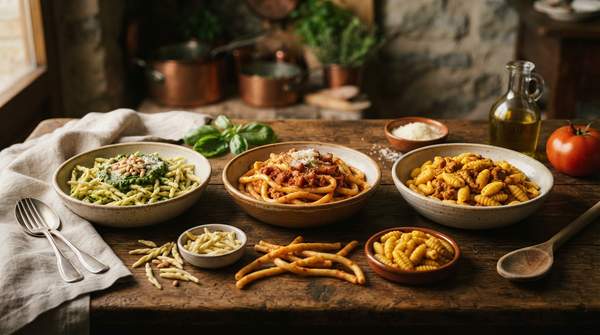
In Italy, the dizzying variety of pasta shapes is not a matter of whimsy but of thoughtful culinary engineering. Each twist, ridge, and hollow was created with a specific dish in mind, designed to interact with its sauce in a particular way. According to culinary guides, this intentional design is a core principle of Italian cuisine, where sturdy, hollow noodles like rigatoni are built to handle hearty meat ragùs, and concave shapes like orecchiette are formed to scoop up small ingredients. Understanding this functional relationship is the key to unlocking the soul of Italian cooking. By exploring a few distinct regional specialties, we can see these principles in action and learn why certain pairings have become timeless, perfect marriages of form and flavor.
Comparative Guide to Regional Pasta Pairings
The logic behind traditional Italian pasta pairings becomes clear when you examine the unique physical characteristics of each style alongside its classic sauce. The following table breaks down three iconic regional pastas, illustrating how their dough, shape, and texture are precisely suited to create a harmonious dish. This comparison reveals a system where the pasta is not just a base for the sauce, but its most crucial partner.
| Pasta Style & Region | Dough & Texture | Shape Characteristics | Traditional Pairing | Why It Works (Pairing Logic) |
|---|---|---|---|---|
| Trofie (Liguria) | Not specified in evidence | Short and tightly twisted | Pesto | The tight twists are perfectly designed to capture and hold onto thick, herbaceous sauces like pesto, ensuring a flavorful bite every time. |
| Pici (Tuscany) | Flour and water; chewy texture | Thick, hand-rolled strands, similar to but thicker than spaghetti | Rich meat ragù or simple garlic sauces | Its thick, rustic, and chewy form provides a hearty foundation that stands up to robust and rich sauces without being overwhelmed. |
| Malloreddus (Sardinia) | Not specified in evidence | Small, ridged, shell-like shapes | Hearty sausage ragù | The deep ridges and concave shape act like small scoops, capturing chunky and flavorful sauces for a complete and satisfying mouthful. |