If you want a tall, open-crumb loaf, reach for bread flour. If you want faster fermentation and a nuttier, more complex flavor, whole wheat is your friend. And if you love a dense, tangy loaf, rye delivers—but it plays by entirely different structural rules. The flour you choose isn't a minor detail; it's the single biggest lever you have over how your sourdough ferments, rises, and tastes.
Here's the good news: you don't need to memorize a dozen flour bags. You just need to understand three things—protein and gluten, water-absorbing components like bran and pentosans, and enzymatic activity. Once those click, you can predict how any flour will behave and blend accordingly.
The Science of Sourdough: How Flour Types Dictate Your Loaf
Every flour is a mix of proteins, starches, enzymes, and—in whole grain flours—the bran and germ of the kernel. Wheat and rye actually share a similar bran-germ-endosperm makeup, as the team at Modernist Cuisine explains. What differs is how those components behave once water and your starter enter the picture.
Wheat flours build structure from gluten—an elastic protein web that traps gas and lets dough rise. Rye, by contrast, cannot form that web. Its proteins, called secalins, simply don't create the same scaffolding that wheat's glutenin and gliadin do. So rye leans on starches and pentosans instead, which changes everything about how you handle it.
Whole wheat sits in between: it has wheat's gluten-forming proteins, but the bran and germ that come along for the ride interfere with how well that gluten can develop. That interference is why a 100% whole wheat loaf behaves so differently from a white bread flour loaf, even though both come from the same grain.
Protein and Gluten: The Foundation of Crumb Structure
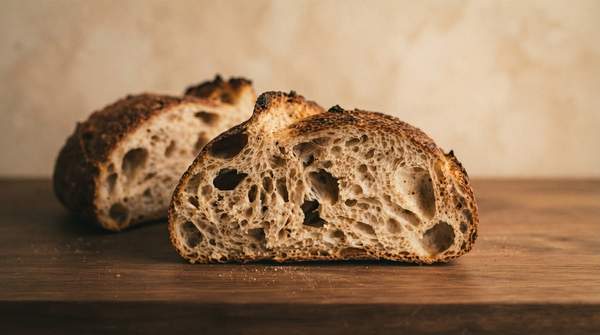
Let's start with the structure question, because it's the one most bakers care about first. Bread flour is high in protein, and as Tiffany of Growing Dawn puts it, that protein "creates a strong gluten structure that can withstand the fermentation process." Strong gluten means an elastic dough, good gas retention, and that coveted open crumb.
Whole wheat flour also contains gluten-forming proteins—it's a higher-protein flour too—but the bran and germ physically cut through the developing gluten network. The result is a denser crumb no matter how much you knead. In fact, aggressive mixing works against you here. Extended autolyse, gentler handling, and time-based gluten development are more effective approaches for bran-rich doughs, according to guidance on fresh-milled whole wheat flour from Homemade Food Junkie.
Rye is the outlier. Its secalins are, in Modernist Cuisine's blunt phrasing, "irrelevant" to bread structure—they don't form the webbing that helps bread rise. Research on rye bread defects confirms that while rye proteins can principally form a wheat-gluten-like network, interactions with hemicelluloses prevent typical gluten structures from developing. This is why Growing Dawn notes that rye flour has a weaker gluten structure and may require the addition of bread flour to achieve a desired texture.