Heirloom seeds can be saved year after year because they come from open-pollinated plants whose genetic makeup stays stable across generations, while seeds saved from F1 hybrids produce unpredictable offspring that rarely resemble the parent plant. That single genetic distinction explains both why heirloom flavors survive across decades of gardening and why modern agriculture's reliance on a narrow band of hybrid crops carries real risks for diversity. Understanding the mechanism turns seed saving from nostalgic tradition into a scientifically grounded practice.
The Foundation of Flavor: What Are Heirloom Seeds?
Heirloom seeds are, at their simplest, seeds with a lineage. As the seed retailer Seed Armory explains, they are varieties passed down through generations of gardeners, usually for at least 50 years. What defines them botanically is not their age but their pollination history: heirloom seeds come from open-pollinated plants, meaning they are pollinated naturally by insects, birds, or wind rather than through controlled crossing. The company describes their genetic makeup as remaining "pure" — unmanipulated by laboratory techniques.
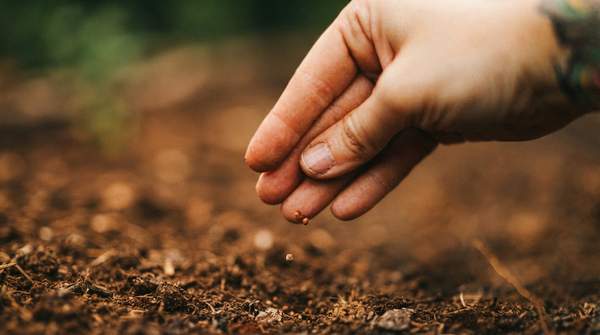
That purity has a practical consequence every gardener can feel. Because open-pollinated heirloom populations carry consistent genetic information for their characteristic traits, seeds saved from an heirloom plant will produce offspring with the same characteristics as the parent — the quality breeders and gardeners call growing "true to type." This holds provided there is no cross-pollination with other varieties, which is why isolation matters for serious seed savers. The tomato that tasted extraordinary this summer can, in seed form, carry that exact flavor forward to next summer and to a neighbor's garden a decade from now.
This stability is precisely what makes heirlooms vessels of flavor heritage. A variety maintained by open pollination for half a century or more is not a frozen museum piece; it is a living, reproducible record of the taste, texture, and adaptation that gardeners in a particular place chose to keep. Every saved seed packet is a small act of conservation, preserving traits that commercial breeding programs — which prioritize uniformity and yield — may never select for.
There is a discipline involved, however. Writing for the University of Florida's horticultural sciences department, plant scientist Kevin Folta cautions that even heirloom seed savers must manage pollination. His guidance is direct: if you plan to save seeds from an annual vegetable like an heirloom, take steps to block potential outcrossing. Uncontrolled pollen from a different variety can mix genetic information and erode the very consistency that makes the heirloom worth saving. Genetic stability is a maintained condition, not a guaranteed one.
The Hybrid Difference: Understanding F1 Genetics
F1 hybrids are a different kind of seed entirely. The "F1" refers to the first filial generation — the offspring produced by deliberately crossing two distinct, genetically uniform parent lines. This is controlled cross-pollination, a deliberate breeding process rather than natural open pollination. The payoff is what breeders call hybrid vigor: F1 plants often exhibit improved uniformity and yield compared with their parents, which is exactly why commercial agriculture embraced them.
The catch lies in what happens next. An F1 hybrid plant is heterozygous for many traits — it carries different versions of genes from each of its two parent lines. That heterozygosity is the source of the hybrid's vigor, but it is also why the hybrid cannot reproduce itself faithfully. When you save seeds from an F1 plant and sow them, the next (F2) generation undergoes genetic segregation: the paired versions of genes reshuffle and separate, producing offspring with unpredictable combinations of traits. Some may be vigorous; many will be inconsistent, and none is guaranteed to match the F1 parent you admired.
Folta's advice to gardeners reflects this biology plainly. If your annual vegetables come from hybrid seeds, buy them fresh each season to ensure uniformity and stable traits across the population — and, he writes, never save seeds from a hybrid and distribute them as the original variety. The seed packet labeled F1 is a one-generation promise. Treating it as a renewable resource misunderstands what the breeding process produced.
Heirloom vs. Hybrid: A Genetic Comparison for Seed Savers
The contrast between the two seed types comes down to one question: what happens when you save the seed? The table below contrasts the genetic stability and reproductive outcomes of open-pollinated heirloom seeds with the variability of F1 hybrids.
| Dimension | Heirloom Seeds | F1 Hybrid Seeds |
|---|---|---|
| Seed type | Open-pollinated variety, typically passed down for at least 50 years | First generation from crossing two distinct parent lines |
| Pollination method | Natural pollination by insects, birds, or wind; a deliberate breeding process is not involved | Controlled cross-pollination of specific parent lines — deliberate breeding, not natural open pollination |
| Genetic makeup | Consistent across generations, described by Seed Armory as remaining "pure," provided outcrossing is blocked | Heterozygous for many traits, carrying different genetic information from each parent; this contributes to hybrid vigor |
| Typical strengths | Reproducible flavor and traits; a living record of agricultural heritage | Often exhibit hybrid vigor, with improved uniformity and yield |
| Seed saving outcome | Offspring match the parent plant's characteristics, provided there is no cross-pollination with other varieties | Will not grow true to type; the F2 generation shows unpredictable segregation of traits due to the F1 parents' heterozygosity |
Read across the rows, the table yields one clear conclusion: only heirlooms reward the seed saver. A gardener who saves heirloom seed is reproducing a known quantity; a gardener who saves hybrid seed is rolling genetic dice. Folta's extension guidance makes the same point from the other direction — buy hybrids fresh each season, or save heirlooms with care.
Cultivating Tomorrow's Flavors: The Call to Seed Saving
The decision that follows from this genetics is straightforward: gardeners should prioritize saving seeds from open-pollinated heirloom varieties to preserve genetic diversity and unique flavor profiles, and understand that F1 hybrid seeds do not reliably reproduce true to type. Heirlooms are the only seed category in this comparison that lets a flavor survive its gardener.
The measure of success is visible and countable: increased availability and cultivation of diverse heirloom varieties in local gardens and seed exchanges. Every seed swap listing a 50-year-old tomato, every neighborhood garden growing a variety no catalog carries, is a data point in that preservation — and a small hedge against a food system narrowed to whatever the hybrid breeders choose to sell.