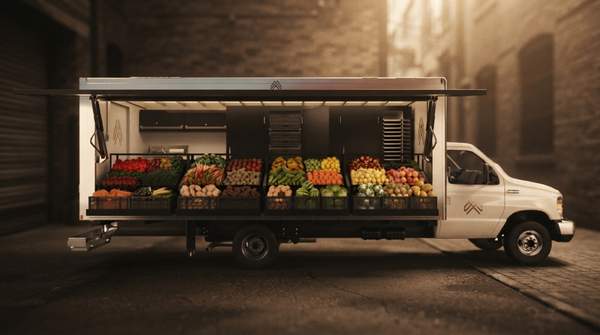
Farm-to-table is a food sourcing model that connects restaurants directly with local farms, cutting out middlemen to deliver fresher ingredients while supporting local economies and reducing environmental impact. That is the definition. The catch is that the phrase carries no legal weight: there is no federal standard a restaurant must meet before printing it on a menu, which is why the label alone guarantees nothing. What separates a genuine operation from a marketing exercise is not the signage but the underlying practices—a defined sourcing radius, named farm partners, menus that actually rotate with the seasons, and contingency plans for when a crop fails. Every one of those is something a diner or home cook can ask about, and this guide shows how.
What is Farm-to-Table? Defining the Movement
In its simplest form, farm-to-table describes a direct connection between the people who grow food and the people who serve it. A guide to the movement published by Agritecture, an urban agriculture advisory firm, defines it as a sourcing model that links restaurants, hotels, and developers directly with local farms, bypassing intermediaries. The same guide frames it more broadly as a social movement promoting locally grown food served straight from its source to the consumer—usually through restaurants, developers, or grocery stores.
That movement rests on three principles, according to the Agritecture guide: environmental sustainability, local economic support, and fresher, healthier dining. It is worth being precise about what this is: a synthesis of common industry descriptions rather than a formal, legally binding definition. No regulator polices the term, and no certification automatically attaches to it. What gives the concept substance is the direct-relationship model at its core—chefs and buyers who know their producers, and producers who understand the demands of a working kitchen. That operational reality, not the label, is what a discerning diner is actually paying for.
The Tangible Benefits of Genuine Farm-to-Table Sourcing
When the practices are real, the benefits are concrete. The most immediate one lands on the plate: shortening the distance between farm and kitchen means ingredients arrive fresher, which translates directly into flavor and quality. The second benefit is economic—money spent at a restaurant that sources locally flows to nearby farms and producers rather than leaking out to distant intermediaries. The third is environmental: a shorter supply chain reduces the transport footprint associated with moving food over long distances.
Consumer demand backs all of this up. The Agritecture guide notes that sustainability and local sourcing ranked as the number-one trend in the National Restaurant Association's 2025 What's Hot forecast, and that 38% of adults say they are more likely to visit a restaurant offering locally sourced food. A 2026 restaurant trade guide makes the same observation from the other side of the counter: guests at both fine dining and casual establishments now read menus more carefully and ask more questions about sourcing, and a credible local sourcing story gives the front-of-house team something genuine to say.
The operative word is "genuine." Every benefit above is realized only when sourcing practices are actually implemented, which is precisely why verification matters. A restaurant claiming the label without the practices captures the marketing value while delivering none of the substance.
Understanding "Local": Diverse Definitions of Sourcing Radius
Here is where the terminology gets slippery. "Local" is a geographic term without a singular federal definition for marketing purposes, as a WebstaurantStore sourcing guide explains. The USDA uses a 400-mile ceiling as a general guideline, but in practice, most consumer and trade understanding of "local" falls within a much tighter radius—typically 100 to 150 miles from the restaurant. That flexibility lets each establishment define "local" based on its region's agricultural landscape, but it also demands clear communication about the chosen radius to avoid customer ambiguity.
A 2026 practical guide for restaurateurs lays out the spectrum of standards in use:
| Standard | Distance or scope | Practical use |
|---|---|---|
| USDA ceiling | 400 miles | Policy boundary, rarely used operationally |
| Industry norm | 100–150 miles | Most common restaurant definition |
| Strict local programs | Under 100 miles | Fine dining and farm-to-table specialists |
| Regional hybrid | 150–250 miles | Inland or rural restaurant locations |
| Credibility threshold | 30–40% of menu items | Minimum that guide suggests before making public local sourcing claims |
The same guide makes the key point: setting an internal radius is an operational decision, not a marketing one. A restaurant that defines "local" as within 150 miles and documents that policy can communicate with confidence. For the diner, the takeaway is that there is no universal standard to check against—so the right move is to ask each establishment for its own definition and judge whether it is specific, consistent, and honestly applied.
The Farm-to-Table Authenticity Checklist
The most reliable way to evaluate a farm-to-table claim is to turn the industry's own operator playbook into diagnostic questions. Restaurant sourcing guides advise operators to visit farms, name their suppliers, negotiate backup plans for crop failures, and build menus flexible enough to absorb supply shocks. A restaurant genuinely doing these things can answer questions about them specifically; one that cannot is running on adjectives. The framework below works by assessing the specificity and transparency of each answer—vague, defensive, or generic responses are the signal, not the absence of a perfect score.
| Dimension | Question to ask | What a credible answer looks like |
|---|---|---|
| Sourcing radius and definition | How do you define "local"—in miles or by region? | A specific, consistent boundary (for example, "within 150 miles"), applied across the menu rather than case by case. |
| Supplier relationships | Which farms do you work with, and how did those relationships start? | Named farm partners. Operators following industry guidance meet producers at farmers markets, visit farms firsthand, and often test relationships with a single ingredient before expanding. |
| Menu seasonality and flexibility | How does the menu change through the year? | Genuine seasonal rotation, with menus built so that no single local ingredient is irreplaceable when supply shifts. |
| Contingency planning | What happens when a crop fails or runs low? | Backup suppliers lined up in advance and documented plans for shortfalls—practices restaurant guides tell operators to establish before bad news arrives, not after. |
| Staff knowledge and transparency | Can your team tell me about the farmers and growing conditions? | Kitchen and front-of-house staff who know the producers and growing conditions, plus precise menu language such as "local when in season" rather than vague sustainability claims. |
Two patterns deserve emphasis. First, precision of language is a strong tell: a restaurant-industry guide on local sourcing argues that saying "local when in season" is stronger than vague sustainability claims, and that restaurants naming their farmers and documenting relationships gain measurable trust. The same guide warns that unsubstantiated farm-to-table claims carry significant reputational risk in an era of social media scrutiny. Second, the framework's effectiveness depends on the restaurant's willingness to answer at all—evasiveness on any dimension is itself diagnostic.
Making Informed Choices: Your Role in Authentic Sourcing
Diners and home cooks should actively question restaurants and producers about their sourcing practices to support genuine farm-to-table efforts and hold establishments accountable. The questions above are not confrontational; they are the same questions good operators ask themselves, and a well-run kitchen will welcome them. The measurable indicator of success is increased transparency from restaurants regarding their sourcing definitions, farm partners, and menu seasonality. Ask for the radius, the farm names, and the seasonal plan at your next meal—and let the specificity of what comes back, or its absence, guide where your table reservation and your grocery dollar go next.
Sources
- Farm-to-Table Design: A Guide for Developers & Architects — Agritecture
- Local Sourcing in Restaurants: A 2026 Practical Guide — Els Pescadors
- Farm-to-table: A restaurant’s guide to sustainable sourcing — OpenTable Resources
- Local Food Sourcing — WebstaurantStore
- Local Sourcing: A Practical Guide to Farm-to-Table for Your Restaurant — NineGuides