If you want to graduate from mild brie to something with real presence, washed-rind cheeses are the category to explore, and the four cheeses compared here — King River Gold, Langres, Winnimere and American Muenster — show how wide that spectrum runs. What makes them "adventurous" is the wash itself: during aging, these cheeses are bathed in brine, beer, wine or other flavorful liquids, which encourages beneficial bacteria and produces the characteristic orange or reddish rind and bold aroma that Antonelli's Cheese describes as hinting at the rich, savory flavors within. The reward for braving the smell is a category that ranges from smooth and mild to gooey and bacon-scented, with each cheese offering its own distinct combination of texture, origin and intensity.
Unveiling Washed-Rind Cheeses: The Art of Pungency
Washed-rind cheeses are prized for distinctive aromas and complex flavors, but the smell and the taste are not the same experience, and that gap is where the adventure lies. Cheese Grotto's Jessica Sennett puts the category's appeal plainly: "Strong in aroma, but varied in flavor and texture, washed rind cheeses are for the serious cheese lover." She adds that for some people, the stinkier the washed-rind cheese, the better — and that those eaters deserve credit for their adventurous palates. The rind treatment, not a single flavor signature, is what unites these cheeses.
The tradition also has a story worth knowing before you choose. Sennett traces one origin of washed-rind cheese to Trappist monks who had also taken up the production of Trappist ale in their monasteries — a historical link that helps explain why beer so often appears in the washing liquid and in the pairing glass. Today the category spans Old World classics like French Langres and American originals like Vermont's Winnimere, alongside Australian hand-washed wheels like King River Gold. That geographic spread matters for the adventurous eater: it means you can choose by origin, texture and intensity rather than by reputation alone.
The Science Behind the 'Stink': How Washed Rinds Develop Flavor
The process is straightforward in principle but microbiologically precise in practice. The exterior of the cheese is washed with a salt-water solution — brine — that Sennett notes is occasionally blended with beer, wine and cider for additional flavor characteristics. The washing happens on a regular schedule, whether once a day, once a week or once a month, and that consistent washing attracts salt-loving bacteria called haleophiles. These bacteria give washed-rind cheeses their distinct orange hue and pungent aroma.
A popular haleophile at work is Brevibacterium linens, though Sennett cautions that a variety of salt-loving bacteria operate on any given washed rind. The Milawa Cheese Company's account of its King River Gold makes the mechanism concrete. Cheesemaker Lauren Morton describes running the cheese under running water and giving it a gentle scrub with a brush, which removes the white mould and leaves a moist, salty environment where the bacteria can grow. Milawa washes its cheeses every week to keep the white mould from returning and to give the Brevibacterium the right conditions to flourish.
Two practical lessons follow from that producer's account. First, washing is ongoing labor, not a single dunk: Milawa's King River Gold wheels are washed by hand every week for roughly six to eight weeks before being wrapped. Second, wash frequency and aroma intensity are linked — Milawa observes, with some irony, that the cheese the company washes the most is the cheese that smells the worst. The specific intensity and character of any wheel's aroma therefore depend on the washing liquid and the bacterial strains involved, which is why two washed-rind cheeses can smell entirely different while sharing the same technique.
A Journey for the Palate: From Mild to Intensely Pungent
Understanding the process gives you the vocabulary for choosing. A washed-rind label tells you the rind will be orange-to-reddish and aromatic; it does not tell you whether the interior is elastic and mild or gooey and smoky. That is where the individual profiles come in, and the four cheeses here were selected to span that range deliberately — a gentle American starter, a classic French decadent wheel, a bark-wrapped seasonal outlier and a hand-washed Australian pungency showcase.
Comparing Washed-Rind Cheeses for Your Adventurous Palate
The table below compares those four cheeses across consistent dimensions — origin, texture, flavor and pairing — so you can see at a glance how different one "stinky cheese" can be from another. All profiles come from each producer's or seller's own descriptions, so expect variation between individual batches and seasons.
| Cheese | Origin/Type | Texture | Flavor/Aroma Profile | Suggested Pairing |
|---|---|---|---|---|
| Muenster | United States; pasteurized cow's milk; an American imitation of France's traditional Munster | Smooth, supple, elastic | Pungent aromas; savory flavors ranging from mild to sharp | Not specified in sources |
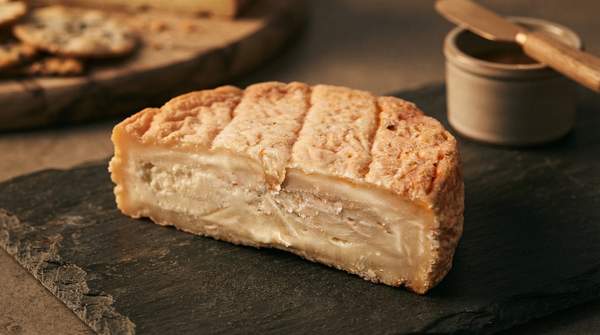
| Langres | France (Germain); raw cow's milk | Creamy, soft | Tangy, earthy flavor with buttery richness; bright orange rind | Crusty bread and sparkling wine; top dimple traditionally filled with Champagne or Calvados |
| Winnimere | Vermont, USA; seasonal, bark-wrapped, raw cow's milk; inspired by Swiss Vacherin | Gooey, spoonable interior | Smoky, woodsy flavor with hints of bacon and forest notes | Spoon onto bread or crackers; robust beer or cider |
| King River Gold | Australia (Milawa Cheese Company); washed by hand weekly for roughly 6–8 weeks | Rind scrubbed free of white mould; moist, salty rind | Rich orangey-pink hue from B. linens; described as stinky but delicious | Not specified in sources |
Read across the rows and the spectrum becomes clear. Muenster is the gentlest entry point: its flavors range from mild to sharp, so a mild batch barely registers on the pungency scale. Langres adds tang, earthiness and buttery richness, with a creamy-soft texture that Antonelli's calls a perfect centerpiece for cheese boards. Winnimere goes furthest toward smoke, bacon and forest notes, with a gooey interior best spooned rather than sliced. King River Gold, meanwhile, is the purest expression of the pungent rind itself — a cheese whose maker cheerfully concedes it smells as strong as its wash schedule implies.
The comparison also reveals how origin shapes character. Two of the four are made from raw cow's milk, one from pasteurized milk, and one is bark-wrapped and seasonal. Those differences are not trivia: they translate directly into the texture you will encounter at the counter, from Muenster's elastic sliceability to Winnimere's spoonable softness. This is a curated set, not an exhaustive catalog of the category — but it covers the main decision axes an adventurous palate faces.
Perfect Pairings: Enhancing Your Washed-Rind Cheese Experience
Because the aromas run bold, pairings that offer either refreshment or complementary intensity tend to work best. Antonelli's recommends crusty bread, fresh fruits or nuts for an easy appetizer, and suggests wines like Gewürztraminer or Belgian-style ales to highlight the savory notes of the category. Those are general guidelines rather than rules — personal preference legitimately varies, and the right pairing for one wheel may overwhelm another.
The individual cheeses point the way further. Langres pairs well with crusty bread and sparkling wine, and its most distinctive tradition is structural: the characteristic dimple on its top is filled with Champagne or Calvados for what Antonelli's calls a luxurious touch. For Winnimere, the recommended serve is spooning the soft interior directly onto bread or crackers alongside a robust beer or cider — a pairing that matches, rather than competes with, its smoky intensity. For newcomers, Muenster's mild-to-sharp range makes it a low-risk first stop before working up to the more assertive wheels.
Notice how these pairings echo the category's own logic. Sparkling wine and beer cut through richness the same way washing shapes it, and the monastic link between Trappist ale and washed rinds reappears in modern suggestions of Belgian-style ales and robust beer. A pairing that follows the cheese's own tradition — bread, bubbles, fruit, ales — is rarely a wrong turn.
Choosing Your Next Washed-Rind Adventure
Based on the comparative profiles, select a washed-rind cheese that aligns with your preferred texture, flavor intensity and pairing preferences for a unique culinary experience. The decision sequence is simple: if you want a gentle introduction, start with Muenster; if you want classic French decadence with a showpiece flourish, choose Langres; if smoke, bacon and forest notes appeal to you, Winnimere is your pick; and if the pungent rind itself is the attraction, King River Gold delivers it in its most direct, hand-washed form.
A successful selection will result in a satisfying tasting experience, confirmed by the cheese's aroma, texture and flavor matching the described profile and complementing your chosen pairings. Keep in mind that these descriptions reflect the sources' characterizations and can vary between individual batches — and Winnimere in particular is seasonal — so treat each wheel as its own encounter. The next milestone for a curious palate is simply the tasting itself: one cheese from this table, one pairing from the suggestions above, and an honest verdict on which direction to explore next.
Sources
- Washed Rind Cheese: Bold, Aromatic Cheeses with Distinctive Flavors — Antonellis Cheese
- What is Washed Rind Cheese? — Cheese Grotto
- King River Gold Cheesemaking Process — Milawa Cheese Company