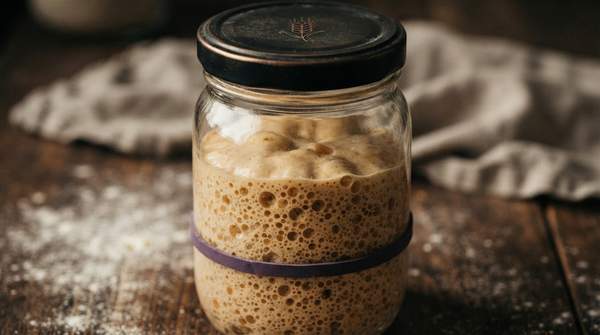
The complex flavor of sourdough bread arises from a microscopic ecosystem thriving in your starter. While flour and water are the basic ingredients, they are essentially flavorless on their own. The characteristic tangy taste and rich aroma are the work of a symbiotic community of two primary microbial groups: lactic acid bacteria and wild yeasts. Lactic acid bacteria are the main producers of the sour notes, while yeasts are responsible for leavening the dough and creating a wide range of more subtle, complex aromas.
The Sourdough Ecosystem: Yeast and Lactic Acid Bacteria
A sourdough starter, or levain, is a preferment where lactic acid bacteria (LAB) and wild yeasts coexist and ferment a simple mixture of flour and water. According to food science resource Modernist Cuisine, the sweet-and-sour flavors characteristic of these breads are by-products generated as these microbes compete and collaborate to survive. This fermentation process transforms simple ingredients, generating acids, alcohols, esters, and other compounds that define the final bread's taste and aroma. Each microbial community can produce a unique flavor profile, making every sourdough starter slightly different.
Lactic Acid Bacteria: The Architects of Sourness
The primary contribution of lactic acid bacteria to sourdough is the production of acids that create its signature tangy flavor. These bacteria ferment carbohydrates in the flour and produce two key acids: lactic acid and acetic acid. Scientific analysis shows these two compounds have distinct sensory profiles. Lactic acid provides what is described as a "fresh acidity," similar to the mild tang found in yogurt. In contrast, acetic acid delivers a "sharp acidity," which is more pungent and vinegary. The combination and ratio of these two acids are what give sourdough its characteristic tangy quality, distinguishing it from commercially yeasted breads.
Wild Yeasts: Leavening and Aromatic Complexity
While most people associate yeast with the carbon dioxide that makes bread rise, the wild yeasts in a sourdough starter play a dual role. In addition to leavening, they contribute significantly to the bread's flavor and aroma. Through their metabolic processes, yeasts produce ethanol, but also a variety of other flavor metabolites. Research published in Frontiers in Microbiology notes that yeasts can generate low levels of organic acids, like acetic and succinic acids, which contribute to the final flavor. More importantly, they are responsible for creating the volatile compounds that we perceive as complex aromas, from fruity to malty notes.