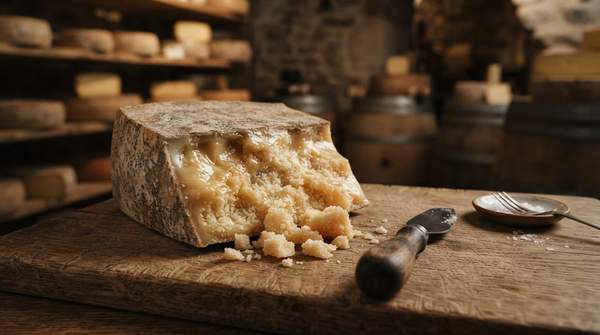
When you taste the difference between a crumbly aged cheese and a creamy, mushroom-scented wheel, you are tasting two biochemical engines at work: proteolysis, the enzymatic breakdown of milk proteins, and lipolysis, the breakdown of milk fats. These two pathways, powered by lactic acid bacteria, rennet, indigenous milk enzymes, and surface molds, transform fresh curd into the enormous diversity of flavors and textures found in artisanal cheeses. Understanding them explains why a Brie, a blue, and a long-aged hard cheese can begin as the same milk and end up worlds apart.
The Foundation of Flavor: Milk Components and Initial Transformations
Every wheel of cheese starts as a matrix of milk components: casein proteins, milk fat, and residual sugars such as lactose. According to a review of cheese processing technology and flavor biochemistry, the variety of cheese that may be obtained is determined by the raw milk characteristics, the fresh curd preparation method, and the microorganisms present in the milk or curds. In other words, the raw materials and the microbial community set the boundaries of what aging can achieve.
Artisanal production often leans into this. As that same review notes, raw milk, especially in artisanal cheese, has conventionally been used without pretreatment before curdling for many varieties. That means the indigenous enzymes and native microbes of the milk remain active participants from the start, rather than being replaced entirely by standardized commercial cultures.
The early steps of cheesemaking—coagulation, cutting the curd, and moisture regulation—lay the foundation for texture, while the flavor profile is primarily determined by enzymatic reactions during fermentation and ripening. As one analysis of cheese science puts it, cheese is a product of a unique balance between biochemical reactions and microbial processes. The two pathways that dominate that balance are proteolysis and lipolysis, alongside the metabolism of residual lactose, lactate, and citrate.