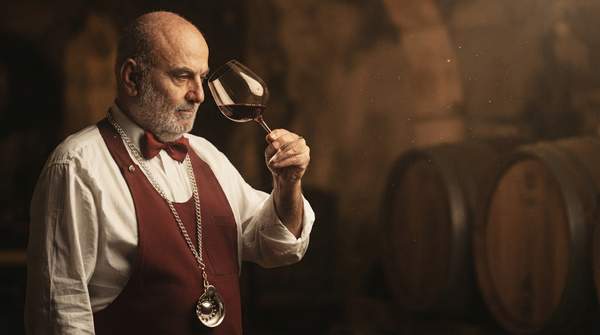
The three titles are not interchangeable: they mark three different scopes of responsibility in a hospitality operation. The sommelier is the guest-facing wine steward of a dining room, guiding guests to the right bottle and serving it correctly. The wine director manages the wine program strategically, often across multiple outlets of a larger operation. The beverage director oversees every drink a property pours—wine, spirits, beer and beyond—across an entire resort or restaurant group. Understanding who does what begins with the role's unlikely origin: a herdsman charged with driving pack animals for traveling French royalty.
From Beast of Burden to Royal Steward
The word "sommelier," according to the San Francisco Wine School's account of the profession's origins, may stem from the old French "sommerier," "somier," and "bête de somme"—a beast of burden, whose herdsman was the original sommelier. By 1316, the term had grown more specialized: the sommelier was the official responsible for transporting the French royalty's baggage when the court traveled, a duty still attested under the reign of Louis XIV.
Within noble households, the position took on duties a modern diner might recognize. A history published by the Texas winery Augusta Vin describes sommeliers in the homes of French lords as being in charge of choosing wines, desserts, and table settings—and using the shallow tastevin cup to test the lord's wine and food for poison. In medieval homes, sommeliers functioned much like butlers. The leap into public dining came later: VinePair's history of the profession identifies 1829 as the first reference to a sommelier working in a Paris restaurant, as the early nineteenth-century French restaurant scene took shape.
The Modern Sommelier: Beyond Pouring Wine
Today's sommelier carries a far broader brief than the bottle service guests see. Standard reference descriptions of the role include developing wine lists, delivering wine service, training the rest of the restaurant staff, and working alongside the culinary team to pair wines with each menu item. When selecting and recommending wines, sommeliers weigh value for money, winery reputation, grape variety, and tracked customer preferences, according to a wine-business study of how sommeliers influence restaurant wine sales. To stay current, the study found, most rely on Wine Spectator, word of mouth, and their own customers' experiences.
The same research highlights the craft behind the list itself: user-friendly wine lists are recommended because most guests do not want to wade through a massive menu, and a list of as few as fifty extremely well-chosen wines is considered enough to cover all the bases even in fine dining. Progressive lists, ranked from lightest to heaviest with descriptive notes, help guests know what to expect in the bottle. At the table, VinePair describes the service ritual: the sommelier presents the bottle before opening it to confirm no misunderstanding about the pairing, sometimes invites the guest to feel the bottle to check its serving temperature, and traditionally opens it in public view.
Comparative Roles of Modern Wine Professionals
The clearest way to distinguish the three titles is to compare them side by side across focus, scope, and duties. The table below draws on professional accounts and academic descriptions of each role.
| Role Title | Primary Focus | Scope of Responsibility | Key Duties |
|---|---|---|---|
| Sommelier | Guest interaction and wine service in the dining room | The wine program and service within a single restaurant | Advising guests on selections; developing wine lists; training service staff; pairing wines with the menu; delivering wine service |
| Wine Director | Strategic management of the wine program | Multiple outlets within a larger hospitality operation | Overseeing wine operations across venues; balancing management responsibilities with wine specialization |
| Beverage Director | The entire beverage program, including wine, spirits, and beer | All beverage operations across a resort or multi-venue property | Managing many restaurants and bars; aligning each venue's wine selection with its culinary identity; guest education |
The pattern the comparison reveals is one of widening scope: as the title moves from sommelier to wine director to beverage director, daily guest interaction gives way to program management across more venues. Joseph Lopez, Director of Beverage at Walt Disney World's Swan & Dolphin Resort, manages twenty restaurants and ten bars across three hotels while treating guest education as central to the job. "One of my responsibilities is teaching at the Swan & Dolphin Food & Festival," he told the Institute of Culinary Education, describing a seminar on Spanish wines, their history, and pairings.
There is a paradox in the titles, though. The wine-business study found that the name "Sommelier" or "Wine Steward" appears to carry more influence with customers than "Beverage Director"—even though the beverage director's responsibilities are broader. The guest-facing title, in other words, is the one diners trust at the table.
The Sommelier as a Crucial Liaison
What the modern role adds up to is less a wine expert in isolation than a connective thread running through the whole restaurant. A recent analysis of wine steward professionalism, applying a typology of four traits—high-level knowledge, autonomy, collegiality, and service—frames the occupation through exactly this combination: deep expertise exercised in collaboration with others rather than alone. Collegiality, in that framework, is not a soft skill but a defining professional trait.
In practice, the liaison work runs in three directions at once. Toward the kitchen, the sommelier pairs wines with each menu item alongside the culinary team. Toward the floor, the sommelier trains service staff so the wine knowledge reaches every table, not just the ones the sommelier visits. Toward the guest, the analysis notes, wine stewards elevate the meal by creating personalized connections with diners, simplifying the complexities of wine, and curating memorable moments that go beyond the meal itself. The same analysis cautions that rapid changes, including technology, are now impacting the unique nature of the work and its professionalism—a reminder that the role is still evolving.
Navigating the World of Wine Professionals
To understand the specific expertise and responsibilities of a wine professional, one must consider their title, which reflects their primary focus and operational scope within a hospitality setting. A sommelier serves guests in one dining room; a wine director manages the wine program across outlets; a beverage director oversees every beverage across an entire property. The measurable indicator is the specific job title (Sommelier, Wine Director, Beverage Director) and the description of their daily tasks and oversight responsibilities within a restaurant or hotel group. Read those two things together—title plus scope of oversight—and the division of labor in any wine program becomes clear.