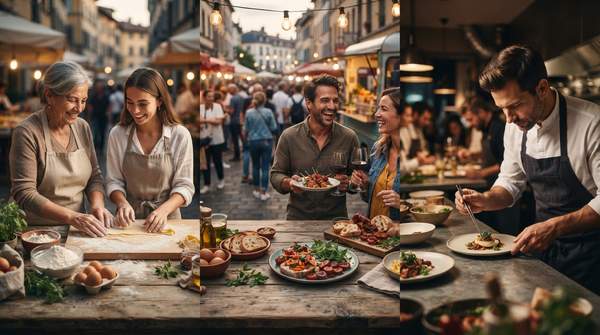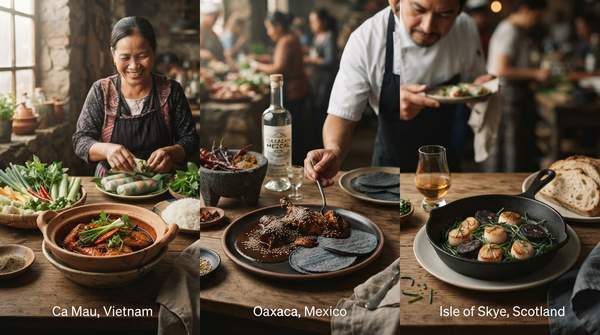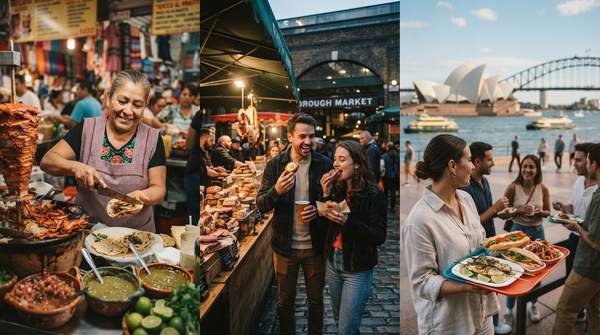
The honest answer to choosing a culinary travel style is that there is no single best one — there are three broad formats, and each rewards a different kind of traveler. Structured or guided tours trade depth for convenience. Chef-led experiences trade effort for hands-on immersion. Independent exploration trades hand-holding for maximum freedom and, potentially, the deepest cultural connection of all. What follows is a decision framework built from how specialized culinary travel providers describe their own formats, so you can match your planning appetite to your hunger for meaning.
Understanding Culinary Travel: More Than Just Eating
Culinary travel promises a lot — vibrant markets, hidden neighborhood restaurants, meals that feel like a window into a city's soul. Yet, as Chef Karl Wilder of The Chef's Tours observes, many travelers come home having eaten in the same tourist-facing spots that could exist anywhere. The difference, in his framing, is context: food without context is just a meal, while food with context becomes a memory.
That gap between eating and understanding is exactly why format matters. Approved Experiences, a travel planning resource, argues that not every food trip should look the same — the format has to match trip length, group size, energy level, and how much work the travelers actually want to do. A market reservation or a workshop visit becomes the real anchor of a trip, and that changes everything operationally: longer dwell times, earlier reservations, tighter coordination.
So before choosing a destination, choose an engagement mode. The three primary formats below differ in who holds the plan, how much you participate, and how deep the cultural reach goes.
Structured & Guided Culinary Tours: Convenience Meets Culture
Guided tours are the entry point for most culinary travelers, and their strongest virtue is efficiency. Per Approved Experiences' planning guide, guided market tours are best for short stays — city breaks and cruise port days — because you get context fast, eat well, and avoid wasting hours deciding where to go. The stated trade-off is shallow depth.
For travelers on tight schedules, that trade is worth making. Approved Experiences maps this format onto specific profiles: frequent travelers who want to add depth without extending a trip, cruise enthusiasts maximizing short port windows, and multi-generational families who need a shared activity everyone can enjoy — cooking classes and market lunches fit that bill well.
Operator descriptions reinforce the personal scale possible within this format. Taste Vacations, a tour company specializing in small-group culinary travel, says its tours are designed to feel personal, relaxed, and thoughtfully hosted — focused on meaningful food and drink experiences and regional culture rather than packing days with nonstop activities. The depth still varies by operator, though; some tours remain more superficial than others, so the traveler's main job is simply choosing a tour whose focus matches their interests.
Chef-Led Experiences & Workshops: Hands-On Immersion
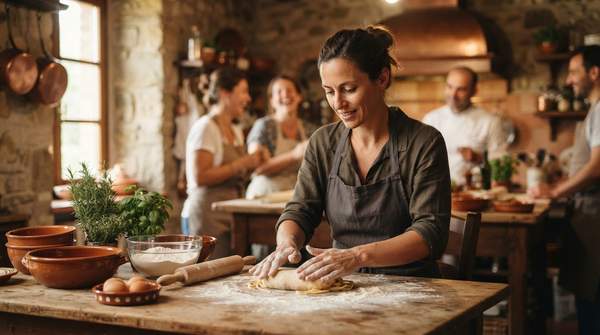
Where guided tours lean toward observation, chef-led experiences lean toward participation. The Chef's Tours frames its chef-led offerings around market visits, hands-on cooking, and insider knowledge that, in its own words, independent exploration cannot match — tours led by local experts who reveal hidden flavors and cultural insights.
This format suits travelers who want more than tasting. The Chef's Tours' trend reporting notes that travelers increasingly seek cultural immersion through food rather than passive observation, with street food and local markets driving the strongest engagement among younger travelers. Chef Karl Wilder's planning guidance targets the same reader: authentic experiences prioritize local sourcing, community impact, and respectful engagement over fame or price.
Planning demands are real but bounded. Wilder advises researching what's in season before booking, shortlisting chefs through credible sources, and then choosing small-group or private formats — large groups, he argues, dilute the experience, while a private or small-group format lets your guide adapt the route to your interests and pace. Effort goes up compared to a standard guided tour, but, as he puts it, the rewards are proportional to the effort.
Independent Gastronomic Exploration: Freedom and Discovery
Independent culinary travel asks the most of you and gives you the most room. No guide sets your route; you research the region, chase seasonal produce, find the producers and market stalls yourself. In exchange, you get the autonomy the other formats can't offer — deciding on any given morning whether the day's theme is a bakery, a fishing port, or a family-run tasca.
The immersive potential is high precisely because engagement is direct. Oh! My Cod, a Portuguese culinary tour outfit writing about slow food and slow travel, describes the ideal as looking someone in the eye as they hand you a plate and tell you where it came from, and why it matters — a mindset of conscious choices that nourish communities and ecosystems, not just the body. That level of connection is harder to reach on someone else's itinerary.
The cost is planning effort. Independent exploration means you handle reservations, seasonal timing, and local navigation — the very work that structured tours absorb. BTOURS, a travel booking platform, notes that culinary tours appeal because they let travelers engage with local chefs and artisans; the independent traveler must build those encounters alone. It's a format for travelers with time, curiosity, and tolerance for logistics.
Culinary Travel Formats: A Decision Framework
This table categorizes the three main formats against the same criteria — who they suit, what they aim for, and what they cost you in immersion and effort — based on how the travel providers above describe them. Read across a row to see a format whole; read down a column to compare.
| Travel Format | Best For (Traveler Profile) | Primary Goal | Immersion Level | Planning Effort |
|---|---|---|---|---|
| Structured/Guided Tours | Travelers who prefer convenience and curated exposure — frequent travelers on tight schedules, cruise passengers, multi-generational families | Efficient exposure to popular culinary highlights and local specialties with fast context | Moderate; guide provides cultural context, but depth varies by operator and can be shallow | Minimal — itineraries, logistics, and bookings handled by the operator |
| Chef-Led Experiences | Small groups and learners who prioritize hands-on participation over passive observation | Deeper understanding of regional dishes, techniques, and food's cultural significance | High — market visits, hands-on cooking, and direct engagement with local experts | Moderate — seasonal research, chef shortlisting, and small-group or private booking |
| Independent Exploration | Autonomous travelers with time and tolerance for logistics | Self-directed discovery of producers, traditions, and meaningful local connections | Potentially the highest — direct, personal engagement with producers and communities | High — all reservations, seasonal timing, and navigation handled by the traveler |
The framework reveals a clear pattern: planning effort and immersion rise together as you move down the table. Guided tours minimize your workload but cap your depth; independent exploration maximizes both. Chef-led experiences sit in the middle, outsourcing logistics to a guide while keeping you at the cutting board.
Choosing Your Culinary Journey: Immersion vs. Convenience
The core trade-off in culinary travel is convenience against depth. Wilder's blunt diagnosis — that many travelers eat in spots "that could exist anywhere" — captures what you risk when you prioritize ease: food without context. His "five-block rule" holds that authentic culinary culture lives at least five blocks from a city's main attractions, and the closer you are to a landmark, the more the food is designed for visitors rather than residents. Guided tours can carry you past that boundary only if the operator is committed to it.
Consider your constraints honestly before choosing. If your trip is short, Approved Experiences suggests keeping it tight: a guided market tour gets you context fast without burning your limited hours on decision-making. If your goal is skill and understanding, chef-led small-group work earns its extra planning. If you have time and want connection on your own terms, independent exploration — in the slow travel spirit Oh! My Cod describes — rewards the effort you put in.
Making Your Choice: Aligning Travel Style with Culinary Goals
Choose a culinary travel format by prioritizing either convenience and curated exposure (structured tours), deep hands-on learning and cultural connection (chef-led experiences), or maximum autonomy and self-directed discovery (independent exploration). The three formats are not rungs on a ladder but different doors: the right one depends on your trip length, your appetite for planning, and whether you want to watch, learn, or wander.
The measurable test is simple: the traveler selects a specific type of culinary experience — books a cooking class, plans a self-drive food itinerary, or reserves a guided food tour — that clearly matches their preferred level of planning and immersion. When your booking mirrors that preference, you've made the decision this framework exists to support. One note on scope: this comparison covers formats only, not specific companies or destinations, and prices vary too widely by region and duration to be compared meaningfully here.
Sources
- Culinary Travel Experiences: A Practical Planning Guide — Approved Experiences
- How to plan immersive culinary travel in 5 steps — The Chef’s Tours
- Food Archives - Taste Vacations®
- Culinary tourism trends 2026: 80% choose destinations by food — The Chef’s Tours
- Slow Food travel & Immersive culinary Experiences — Oh! My Cod
- 7 Best Culinary Travel Tours for Foodies in 2027 – BTOURS