If you are planning a food-focused trip, the most useful question is not "where should I eat?" but "what kind of eating experience do I want?" Not every culinary destination works the same way. Some are intimate regional events built around a handful of producers; others are sprawling urban showcases of hundreds of venues; still others are cities remade by a generation of ambitious chefs. Based on current coverage of three very different food-travel stories—a Latvian restaurant week, a Hong Kong city festival, and a Bolivian gastronomic movement—this article breaks culinary travel into three distinct models and helps you decide which one fits the trip you actually want to take.
Understanding Culinary Travel: Beyond Just Eating
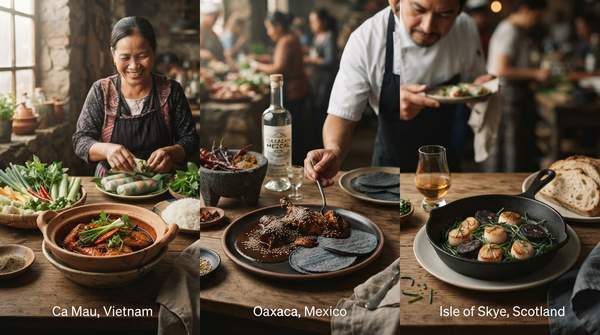
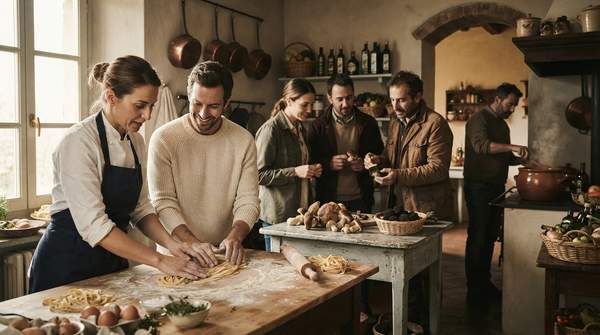
The first thing worth understanding is that serious food travel has outgrown the simple act of eating well. Writing in Hà Nội Mới about Vietnam's tourism sector, Tran Thi Tuyet Mai of the Tourism Research Department at the Vietnam Institute of Culture, Arts, Sports and Tourism argues that the real gap "lies not in a lack of resources, but in the ability to transform culinary values into in-depth, interactive experiences for tourists." Her prescription is a shift in mindset from "selling food" to "creating co-creative experiences"—where, instead of just tasting a local specialty, a visitor visits the market, learns about the ingredients, meets the chef, or prepares the dish themselves.
This matters for trip-planning because it gives you a way to judge destinations before you book anything. A place can have excellent food and still offer you nothing but a plate. The richest food journeys are the ones where the meal opens a door into how a community actually lives. As Tran Thi Tuyet Mai frames it, "the food becomes the starting point to lead guests to other layers of culture."
The 'Taste of Place' and Immersive Experiences
The clearest articulation of this idea comes from the World Food Travel Association, which named the concept of Taste of Place™ in 2001 and has since built research and standards around it, growing into a movement active in more than 150 countries. The association's framing is worth sitting with, because it explains why culinary travel so often feels deeper than ordinary tourism:
"A culinary tradition is not an object in a collection. It is a set of decisions somebody is still making this morning… People are the living form their own culture takes. They do not stand beside a tradition and guard it. They are the tradition, and it travels exactly as far as they take it."
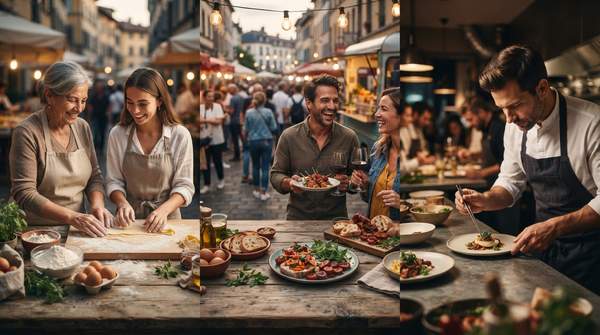
That is a useful lens for comparing destinations. A festival, a restaurant week, and a chef-driven scene all carry a "taste of place," but they carry it through different people and at different scales—producers and café owners in one case, hundreds of bars and restaurants in another, a vanguard of chefs in a third. The three models that follow each answer the question of whose food culture you encounter, and how.
Type 1: The Hyper-Local Event
The first model is the hyper-local event: a short, region-specific program that connects a small constellation of venues around seasonal ingredients from the surrounding area. Valmiera Region Restaurant Week, in northern Latvia, is a textbook example. The event began on Friday, 13 November and runs until Sunday, 22 November, bringing together six restaurants and cafés in Valmiera, Valmiermuiža and Mazsalaca, with menus built around seasonal ingredients and products from the surrounding region, as reported by The Baltic Review.
What distinguishes this model is its organizing idea rather than its discounts. The program is explicitly presented as more than a set of reduced-price meals: its central concept is to connect three parts of the local food chain at one table—the producer, the chef and the visitor. The programme distributes activity across several hospitality businesses, including independent cafés, a hotel restaurant and a brewery-linked kitchen, and the producer partnerships give each venue its own story. Guests are invited to plan a meal as part of a broader overnight or day trip, which means choosing where to eat becomes part of the destination itself.
Type 2: The City-Wide Festival
The second model operates on an entirely different scale. A city-wide festival takes a metropolis's entire dining ecosystem—an entire spectrum from fine dining to street food—and packages it into a timed, curated celebration. Hong Kong Gourmet Month, running throughout November 2026, is the current example. Organized by the Hong Kong Tourism Board, it follows the Hong Kong Wine & Dine Festival, which attracted more than 171,000 visitors, and brings together more than 400 restaurants and bars across the city, according to Travel Daily Media.
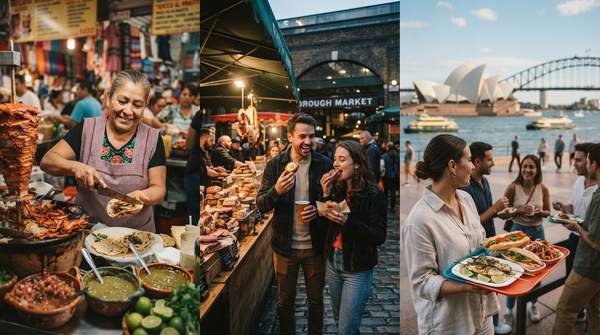
The appeal here is range. Visitors move between Michelin-starred restaurants and neighbourhood favourites, with programming that includes food and drink experiences, mixology workshops and retro-themed evenings. The creative-drinks coverage is characteristic of the model's inventiveness: tea-infused cocktails at Tell Camellia and Bar Mind's Sweet Potatoni, a drink inspired by local street food, plus more than 20 participating venues in Lan Kwai Fong alone. Where the hyper-local event offers depth within one region's food chain, the city festival offers breadth—many cuisines, many neighborhoods, many moods—positioning the city, as the coverage puts it, as an international dining destination.
Type 3: The Chef-Driven Gastronomic Hub
The third model is not an event at all but a durable scene: a city where an emerging generation of chefs builds a distinct culinary identity, and where restaurants themselves become the reason to travel. Eater's 2026 "Where to Eat Around the World" guide identifies La Paz as emerging as one of South America's great gastronomic hubs, with local chefs building on bold flavors and the country's enviable biodiversity.
What makes the chef-driven model distinctive is its lineage and its ingredient culture. Many of the city's culinary talents are alumni of Gustu, Claus Meyer's celebrated restaurant that first connected La Paz to the global dining scene, and they are now defining a new era in their own city. At Arami, chef Marsia Taha Mohamed and sociologist-sommelier Andrea Moscoso Weise's restaurant, meticulously sourced Amazonian ingredients fill a warm, contemporary tasting menu—an approach Eater describes as a defining force in modern Bolivian cuisine. For travelers, this model means no fixed dates and no festival schedule: the experience is distributed across a dining scene you explore on your own rhythm, driven by curiosity about individual chefs and their sourcing philosophies.
Culinary Travel Destination Decision Matrix
With the three models established, the comparison below sorts them across their core dimensions: what each one focuses on, what the experience actually feels like, and which kind of traveler it suits. The point of the matrix is diagnostic—if you know which column describes your appetite, you know which model to plan around.
| Destination Type | Primary Focus | Typical Experience | Best For Travelers Seeking... | Example Destination |
|---|---|---|---|---|
| Hyper-Local Event | Seasonal ingredients and local producers within a specific region | An intimate regional exploration with a direct connection to the local food chain—here, six restaurants and cafés across three Latvian towns | Authentic, community-focused culinary immersion and regional discovery | Valmiera Region, Latvia (Restaurant Week, 13–22 November) |
| City-Wide Festival | Diverse culinary experiences across an entire urban area, showcasing a global dining hub | More than 400 participating restaurants and bars, spanning Michelin-starred venues to street-food-inspired cocktails, mixology workshops and themed evenings | Variety, urban exploration and exposure to international flavors within a vibrant city | Hong Kong (Gourmet Month, November 2026) |
| Chef-Driven Gastronomic Hub | Chef innovation built on indigenous ingredients and biodiversity | An open-ended dining scene shaped by individual restaurants—such as contemporary tasting menus built on sourced Amazonian ingredients | High-end, chef-led dining and ingredient-driven culinary creativity | La Paz, Bolivia |
Read across the rows and the trade-offs become explicit. The hyper-local event trades scale for intimacy: six venues in one Latvian region versus four hundred in Hong Kong. The city festival trades intimacy for variety and spectacle. The chef-driven hub trades the fixed dates and group energy of a festival for a scene you can visit any time of year—but you must do more of the planning yourself, since there is no festival program to follow.
Matching Your Palate to Your Next Journey
Travelers should evaluate their preferences for authenticity, variety, and immersive experiences to choose the culinary destination type that best suits their interests. In practical terms: if meeting producers and tracing a short regional food chain sounds compelling, look for restaurant weeks in small wine- and farm-country regions; if you want maximum choice and urban energy, time your trip to a city-wide food festival; if a single ambitious restaurant can justify a journey, chase the chef-driven scenes where a new generation is reworking native ingredients.
The measurable indicator of a well-chosen trip, on this framework, is a traveler's satisfaction with their culinary travel—measured by their engagement with local food culture and the alignment of the experience with their expectations. You can check that before you leave: the visitor who books Valmiera's Restaurant Week wanting producer stories, or Hong Kong wanting four hundred doors of choice, or La Paz wanting Amazonian tasting menus, has matched model to appetite. And each model has a concrete next milestone to watch: the Latvian event runs through 22 November, Hong Kong Gourmet Month through November 2026, and La Paz's restaurant scene continues to evolve through openings like Arami—the kind of development that tells you a chef-driven hub is still building momentum.
Sources
- Enhancing the value of culinary tourism. — Vietnam
- Everywhere has a Taste of Place™ — World Food Travel Association
- Valmiera Region Restaurant Week highlights local Latvian food — The Baltic Review
- Hong Kong Gourmet Month celebrates culinary diversity — Travel Daily Media
- Where to Eat Around the World in 2026 — Eater