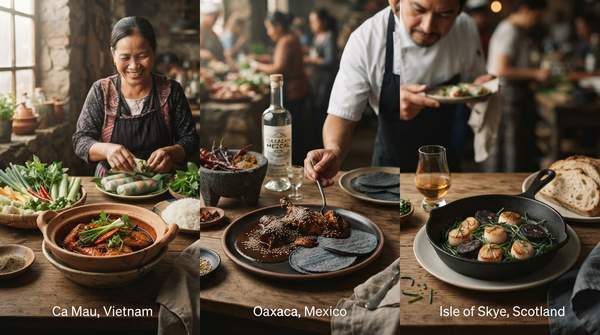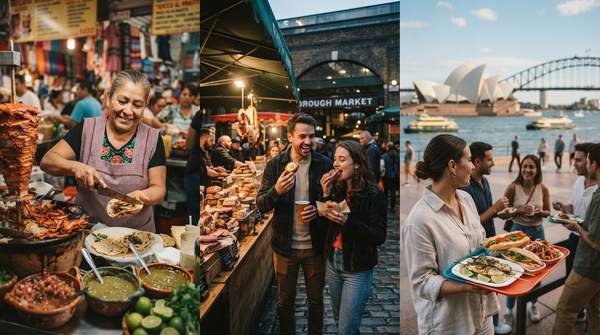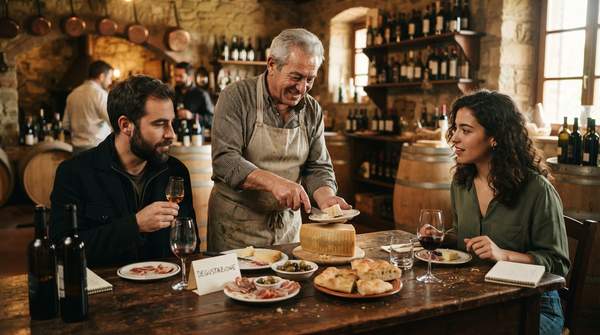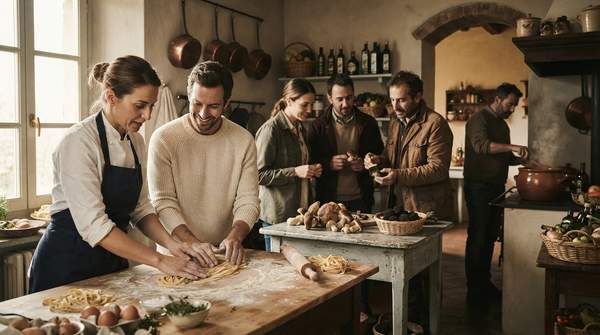
Food has quietly stopped being a supporting act on our itineraries and taken over the stage. The most useful way I have found to make sense of this shift is to sort the world's immersive food and drink experiences into three broad types: instructional experiences built around learning, exploratory experiences built around tasting and discovery, and producer-focused experiences that take you to the source. Each type answers a different question — how is this made, what does this place taste like, and where does it all come from — and each comes with its own destinations and signature activities.
The Rise of Experiential Culinary Travel
What distinguishes today's culinary traveler from yesterday's restaurant tourist is the demand for participation. Industry analysis from Grand View Research describes a strong and growing appetite for authentic, immersive experiences, with visitors seeking "deeper cultural connections rather than just dining at popular restaurants." The hands-on engagement travelers now want — cooking classes in Bangkok, street-food explorations in Penang, sushi-making workshops in Tokyo, traditional tea ceremonies in Kyoto — is designed to reveal the history, ingredients, and cultural significance behind local dishes, not just their flavor.
The scope of the activity itself has widened, too. A research overview from EBSCO notes that culinary tourism now includes not only eating and drinking but the broader "foodways" — all the related activities surrounding food preparation and consumption. That means walking tours, cooking with local hosts, and agritourism experiences on farms all count as part of the same phenomenon. The same overview connects the surge in popularity to the rise of social media, as tourists chase authentic connections centered on local cuisine.
Writing for The Rooms Collection, an editor for a hospitality group puts the trend bluntly: travelers "want to taste the identity of a destination," and a growing audience now plans "their entire trip around the plate." In other words, the meal is no longer a stop on the journey — for many of us, it has become the reason for the journey itself.
Experiential Culinary Tourism: A Traveler's Guide
Here is the framework I use to sort the options. The classification works by asking what the core purpose of an activity is: learning, exploring, or sourcing. A cooking class and a vineyard tour both involve food, but they answer entirely different traveler impulses, and knowing which impulse is yours makes planning far simpler.
| Experience Type | Core Activity | Example Destination/Activity |
|---|---|---|
| Instructional | Hands-on participation in food preparation — cooking classes and workshops where you learn traditional methods and recipes | Sushi-making workshops in Tokyo; cooking classes in Bangkok; traditional tea ceremonies in Kyoto |
| Exploratory | Guided discovery of a region's gastronomy through food or drink tours, tastings, and festivals, emphasizing authentic dishes and cultural immersion | Street-food explorations in Penang; walking tours of local food cultures |
| Producer-Focused | Visiting farms, markets, and producers to understand where food comes from, exploring foodways and sustainable production | Truffle identification in Tuscany; a farm-to-table vineyard experience in Comporta, Portugal |
A few notes on how to read this. Instructional experiences are defined by active participation — you are the one chopping, rolling, or whisking. Exploratory experiences are often guided and focus on local specialties, but the emphasis falls on tasting and immersion rather than technique. Producer-focused experiences connect you with origins: the field, the market, the maker. The EBSCO overview captures why the third category feels so different from ordinary sightseeing — a group that shops a farmers market, cooks alongside hosts, and even helps with the dishes gets "a much broader and more memorable experience than just dining in a restaurant."
The producer-focused category also carries a quieter benefit. By meeting local artisans and understanding foodways, these visits help support the people preserving gastronomic traditions — a point both the EBSCO overview and the standard definition of food tourism emphasize when they list farm, market, and producer visits among the core activities of the field.
Asia Pacific: A Hub for Authentic Culinary Experiences
If one region shows how destinations are leaning into this trend, it is Asia Pacific. Grand View Research projects the region's culinary tourism market to grow at the fastest compound annual rate in the industry — 23.4 percent from 2026 to 2033 — and attributes that growth to travelers pursuing exactly the kinds of experiences in the table above.
What makes the region's offering distinctive is how neatly its destinations map onto the three categories. Tokyo and Bangkok anchor the instructional type, where a sushi workshop or a curry-pounding class turns a meal into a lesson in technique and history. Penang is the exploratory standard-bearer, its street-food scene a guided tasting route through hawker stalls and multicultural heritage. Kyoto's traditional tea ceremonies sit somewhere between instruction and immersion — a ritual in which the making is the meaning. And the region's competitive edge, according to the market analysis, lies precisely in authenticity and interaction with local communities rather than in polished restaurant dining.
Europe offers the clearest producer-focused counterpoint. A travel feature from Le Collectionist magazine describes learning to identify Tuscany's prized truffles — understanding their growth cycle, their seasons, and the difference between genuine treasures and imitations — as "a truly sensory adventure." The same feature profiles a private vineyard in Comporta, Portugal, where visitors tour the estate with expert vintners, taste the estate's finest wines, and finish with a gourmet meal built from locally sourced, seasonal produce: a complete arc from soil to plate.
Planning Your Culinary Journey
So how do you choose? Start with the question each type answers. If you want to bring a skill home — the ability to recreate a dish, a technique, a ritual — choose an instructional experience and look for small-group classes where you actually cook. If you want to understand a place through its flavors in a compressed amount of time, choose an exploratory experience: a guided street-food tour will teach you more about a city in an afternoon than a week of restaurant dinners. If you care about where your food comes from and want to meet the people who make it, choose producer-focused experiences — vineyard visits, farm tours, market mornings.
The categories also mix well. A single trip to Asia Pacific could combine a Bangkok cooking class, a Penang street-food crawl, and a Kyoto tea ceremony, hitting all three types in one itinerary. And tour operators have increasingly bundled these experiences together — the EBSCO overview notes that companies now offer tailored services such as walking tours and meals with local hosts, sometimes combining other interests, like cycling through a wine region before dinner at an award-winning restaurant.
Embrace Your Next Culinary Adventure
Travelers can choose from instructional, exploratory, or producer-focused culinary experiences to deepen their engagement with local cultures and cuisines — and the framework above is the tool for matching the type to your interests. The measurable indicator of this trend's momentum is increased traveler engagement with local food experiences and a growing diversity of culinary tourism offerings in destinations like the Asia Pacific region, where the projected 23.4 percent annual growth rate through 2033 gives you a concrete benchmark to watch. Before your next trip, pick one activity from each category and see which one you are still thinking about a week later — that is the experience type worth building your next journey around.
Sources
- Culinary Tourism Market Size & Share Report, 2026-2033 — Grandviewresearch
- Culinary tourism | Astronomy and Astrophysics | Research Starters — EBSCO
- The rise of culinary tourism: Why food is now a primary travel driver - The Rooms Collection Magazine
- Culinary tourism - Wikipedia — EN
- Culinary Tourism : Exploring the World Through Cuisine — Magazine