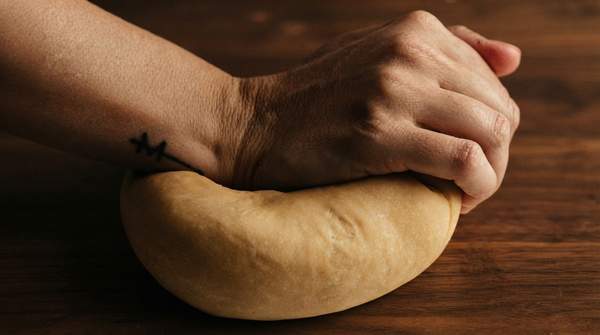
Every sheet of fresh pasta you roll is the product of one central chemical event: two wheat proteins, glutenin and gliadin, meeting water and linking into a network we call gluten. As the Institute of Food Science and Technology explains, mixing flour with water combines these proteins into gluten, and without water, gluten simply is not formed. Kneading then organizes that network, and resting relaxes it. Once you understand that chain, sticky, crumbly, or rubbery dough stops being a mystery and becomes a diagnosis.
The Science of Pasta Dough: An Introduction to Gluten
Wheat and related grains such as barley and rye contain a mixture of the two proteins glutenin and gliadin. When flour ground from these grains is hydrated, the proteins combine and form gluten. This is the structural backbone of your dough, the source of its elasticity and stretch.
The amount of gluten you develop is the main lever on texture. The more the dough is mixed, the more gluten develops, causing the dough to become elastic and stretchy. But more is not automatically better for pasta. A student chemistry project at Dickinson College that varied egg composition in pasta doughs concluded that "large amounts of gluten are not the most pleasurable for pasta." The goal is a robust, organized network with enough strength for bite, but not so much that the dough resists rolling and turns tough.