The gap between a squat, pale loaf and one with height, definition, and a clean, open score often starts with the tools, not the recipe. Across the baking guides compared here, four tool categories keep reappearing — banneton baskets, bread lames, rigid bench knives, and flexible bowl scrapers — and within each, the material and design choices matter. A cane banneton and a wood pulp one behave differently in the fridge; a bench knife and a bowl scraper look similar but belong at opposite ends of the process; and a real lame outperforms the sharpest knife in your drawer. Here is how each design choice maps to dough handling, proofing, and the finished crust.
The Foundation: Banneton Baskets for Perfect Proofing
A banneton is, at its core, a support tool: America's Test Kitchen describes it as a basket that holds and shapes dough during its long rise and fermentation, and notes that a floured, dish-towel-lined colander can stand in as a DIY version. Writing at DBakerAid, Claire Bennett puts the stakes plainly: when a loaf comes out squat despite careful shaping, the problem often starts before fermentation, with a basket that is the wrong size, material, or shape for the dough. The right basket helps the dough hold tension while it proofs.
Material is where the real decision lives. Laura of A Beautiful Plate notes that traditional bannetons are natural cane baskets whose material helps absorb excess moisture. King Arthur Baking's guide explains what that wicking accomplishes: during the final rise, especially with a cold ferment in the fridge, the banneton draws moisture away from the loaf's surface, and a drier surface makes scoring much easier and supports a sturdier crust.
Wood pulp is the main alternative. Adam Thalenfeld, writing for Epicurious, reports that wood pulp bannetons have thicker walls than cane but weigh no more, and those thicker walls are designed to keep dough at a consistent temperature — which he calls vital to a high-quality final product. He also found the material more naturally nonstick than cane, needing only a quick dusting of rice flour for the dough to release beautifully, though these baskets cost more than traditional ones.
On sizing, Laura recommends 8- or 9-inch round bannetons and 10- or 11-inch oval ones, chosen to fit your baking vessel and to leave room for the dough to expand slightly during proofing. King Arthur adds that liners are optional — unlined baskets leave a pretty pattern on the bread — but a liner helps prevent sticking, and you should flour the banneton either way. Maurizio Leo of The Perfect Loaf dusts his with rice flour specifically so the dough releases cleanly.
Mastering Dough Handling: Bench Knives vs. Flexible Bowl Scrapers
These two tools are frequently confused, and they should not be. Leo calls the bench knife "a must-have" and describes its job as cutting, lifting, and moving your dough. Laura echoes that from a working kitchen's perspective: a bench knife is extremely helpful for shaping and dividing bread dough, scooping up ingredients, and cleaning off countertops. She prefers models with rubber handles so they can go in the dishwasher.
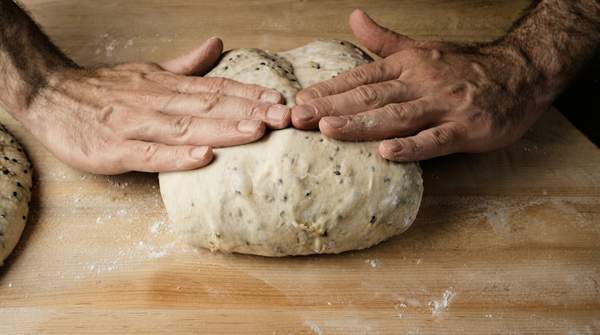
The design point is rigidity. A bench knife is a stiff, straight-edged blade meant for work on a flat surface: dividing a bulk of dough into portions, sweeping pre-shapes along the counter, and scraping the work surface clean. Its straight edge is what makes clean dividing possible, and its stiffness is what lets you slide it under a dough without the tool flexing away.
The flexible bowl scraper is the opposite instrument for the opposite geometry. Leo uses one to easily remove sticky dough from containers. Laura keeps one on hand for scraping mixing bowls and for mixing bread dough during various stages of the process. Because the edge flexes, it conforms to the curve of a bowl and sweeps sticky, fermented dough off the sides in a way a rigid tool cannot.
The practical division of labor follows directly from those designs. During mixing and bulk fermentation, when the dough is in a container and at its stickiest, the flexible scraper does the work. When the dough hits the counter for dividing and shaping, the rigid bench knife takes over. Bakers working with wetter, stickier doughs will lean on the bowl scraper more often; the bench knife earns its keep at every pre-shape regardless of hydration.
Precision Scoring: Unleashing the Power of the Bread Lame
A bread lame — pronounced "lahmes," as America's Test Kitchen notes — is a razorlike tool used by professionals to slash the surface of dough. The purpose of slashing, per the same testing team, is functional before it is decorative: the cuts create expansion zones that let the loaf rise fully, along with flavorful ridges of crust and fanciful decorative patterns. Leo's summary is even shorter: score just before baking to encourage maximum rise.
Why not just use a knife? The America's Test Kitchen writer who tested both is direct about it: "I used to use my sharpest knife and it still wasn't quite up the precision and control I got with a real lame." A kitchen knife, however sharp, drags where a razor-thin blade glides, and dragging tears the surface instead of opening a clean expansion channel.
Technique matters as much as the tool. The same tester slashes the dough at a roughly 45-degree angle, cutting just under the surface rather than straight down. That shallow, angled cut is the move behind the raised lip of crust that bakers chase on an open, well-expanded loaf — the sharper the blade, the cleaner the cut, and the more reliably the ridge forms instead of tearing.
On equipment specifics, America's Test Kitchen's favorite lame comes from Breadtopia, which the team found super sharp and which ships with five extra blades. Fresh blades are the whole point: a dull edge reintroduces exactly the tearing problem the tool exists to solve, so a lame with replaceable blades stays in working order indefinitely.
Sourdough Tool Selection Matrix
The table below maps each tool's design features to the stage where it works and the outcome it produces, so you can select a variation for a specific result — a sturdier crust, a cleaner divide, a more controlled score — rather than buying by category alone.
| Tool Category | Primary Function | Key Variations (Material/Design) | Impact on Dough/Crust | Best For... |
|---|---|---|---|---|
| Banneton basket | Holds and shapes dough during its long rise and fermentation | Natural cane or wood pulp; round (8–9 in.) or oval (10–11 in.); lined or unlined | Wicks surface moisture for easier scoring and a sturdier crust; wood pulp is more naturally nonstick and insulates for consistent dough temperature | Cold-fermented loaves and bakes where you want height, definition, and clean release |
| Bread lame | Scores dough just before baking to encourage maximum rise | Razorlike blade held at an angle; replaceable blades (America's Test Kitchen's Breadtopia pick ships with five extras) | Clean slashes create expansion zones, flavorful ridges of crust, and decorative patterns where a knife drags and tears | Maximum oven rise, a clean angled cut, and precise or decorative scoring |
| Bench knife | Cuts, lifts, and moves dough on a flat surface | Rigid straight edge; rubber handles allow dishwasher cleaning | Enables clean dividing and shaping; also scoops ingredients and scrapes countertops clean | Dividing dough and pre-shaping at the counter |
| Flexible bowl scraper | Removes sticky dough from bowls and containers | Flexible edge that conforms to curved surfaces | Gentle, thorough scraping during mixing and bulk-fermentation stages | Sticky dough in bowls, from mixing through bulk fermentation |
Read across the rows and the pattern is consistent: each design feature earns its place at one stage. Flexibility serves curved containers; rigidity serves flat work; an absorbent basket serves the final rise; a razor blade serves the moment just before the oven. No single tool substitutes for another without giving something up.
Making Your Choice: Aligning Tools with Baking Goals
Start from the outcome you are chasing. If your loaves spread or come out squat, the first purchase is a properly sized banneton in cane or wood pulp — the basket that helps the dough hold tension, per Bennett, and the material that wicks moisture for a sturdier, easier-to-score surface, per King Arthur. Wood pulp is worth the premium if you want the nonstick release and temperature stability Thalenfeld describes; cane is the traditional, widely available option that still absorbs excess moisture.
If your struggle is handling — dough clinging to bowls, ragged divides — buy the two scrapers as a pair and keep their roles separate. The flexible one lives at the mixing and bulk-fermentation stage; the rigid bench knife comes out for dividing and shaping. Leo's "must-have" verdict applies to the bench knife, but the bowl scraper is what makes sticky, wet doughs manageable in their containers.
If your scores tear, drag, or fail to open, the lame is the fix. The America's Test Kitchen comparison against a sharp kitchen knife is the clearest evidence that this is a real precision upgrade, not a gadget: the razor blade, held at roughly 45 degrees just under the surface, is what produces clean expansion zones and the crust ridges that follow.
Two boundaries on this advice: it covers hand tools for shaping, proofing, and scoring only — not mixers, baking vessels, or starter gear — and it assumes you already have a working sourdough process. The named products above appear because testers singled them out, not as endorsements of a brand over its function.
Refining Your Sourdough: The Right Tools for the Job
Advanced home bakers should invest in specialized sourdough tools like bannetons, lames, and distinct scrapers, selecting variations based on desired dough handling, proofing characteristics, and scoring aesthetics. The reasoning holds across every source here: material and design choices — cane versus wood pulp, rigid versus flexible, razor versus kitchen knife — produce measurably different behavior at the proofing, handling, and scoring stages.
The measure of success is concrete: improved loaf shape, cleaner scoring, a more pronounced 'ear', and a crispier crust in subsequent bakes. Watch for those four markers on your next loaf out of the banneton — a loaf that holds its tension when inverted, takes a 45-degree slash without tearing, and opens into ridged crust is the direct, observable evidence that the tool choices are doing their jobs.
Sources
- Essential Tools for Bread-Baking — America's Test Kitchen
- Banneton Proofing Basket: Your Guide to a Perfect Loaf — DBakerAid™
- Favorite Sourdough Bread Tools and Resources — A Beautiful Plate
- Bannetons, brotforms, and proofing baskets: a guide — King Arthur Baking
- For Better Loaves, Proof Your Dough in These Bannetons — Epicurious
- My Highly Curated Baking Tools — The Perfect Loaf