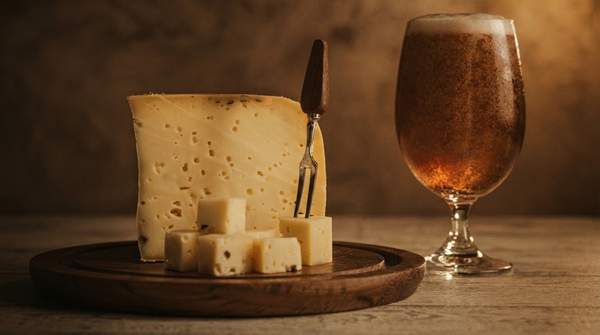
Wine is not the only worthy partner for a great cheese. Cheesemonger Steve Jones of Cheese Bar in Portland, Oregon, argues beer is actually the better match: its bubbles keep scrubbing your palate so you can taste more, and longer. Meanwhile, French affineurs are pairing Roquefort with pear liqueur, and non-alcoholic aperitifs are proving that a cheese board can delight drinkers and non-drinkers alike. Here are the principles—and the specific pairings—that make these unexpected combinations work.
The Art of Beer and Cheese: Matching Intensity and Cleansing the Palate
Jones, who collaborates with local breweries to make cheese-friendly beers, credits effervescence as beer's secret weapon. Carbonation keeps the palate lively between bites, cutting through richness so each taste of cheese arrives fresh. That cleansing action lets you serve richer, more assertive cheeses without fatiguing your guests.
His second principle is intensity matching: bring two big flavors to the table together. A bold beer deserves an equally bold cheese—when one side overwhelms the other, the pairing falls apart. IPAs, he cautions, are notoriously difficult; you need a big, flavorful cheese like an aged cheddar, or sometimes a smoky blue, to stand up to them. And one honest caveat from a professional: sheep's milk cheeses are the hardest to pair with beer, and he suggests trying cider instead.
Spirited Combinations: Harnessing Richness and Botanical Notes
The most dramatic evidence that spirits belong on the cheese cart comes from France. Cyrille and Christelle Lorho—MOF cheesemakers of France—teamed up with Distillerie Massenez on a collection called the Accords Frappés, pairing Massenez eaux-de-vie and liqueurs with exceptional cheeses. Maison Lorho describes the result as contrasting perfumes whose balance comes from the fruit aromas and the power of the cheeses.
The collection's flagship pairing, "Caresse de Bleu," combines Roquefort Caves Baragnaudes with Massenez's Golden Eight pear liqueur. The concept proved compelling enough that it led to a collaboration with Xavier Thuret of Maison Société—and eventually to the creation of a Liqueur de Roquefort, extracting the cheese's very essence. The principle here is complementary richness: a spirit's fruit and sweetness develop the aromatic power of the cheese rather than fighting it.
Non-Alcoholic Delights: Complexity Without the Alcohol
Zero-proof drinks bring their own logic to the table. Rachel Holding, writing for the Academy of Cheese, builds her non-alcoholic aperitifs on fruits, herbs and spices—many of the same flavors found in chutneys, membrillo, jams and syrups that people already serve with cheese. That botanical mimicry makes them intuitive partners, "especially when you want everyone at the table, drinkers and non-drinkers, to enjoy something thoughtful and special."
She also notes a practical benefit: without alcohol, nothing dulls the palate, so the cheese's texture, lactic brightness and salt come through vividly. Dealcoholized wines follow a similar logic. Patrick Dooling of DRAY, a non-alcoholic bottle shop, pairs a delicate, floral dealcoholized rosé with mild, creamy Boursin, letting the subtle herb-infused notes in both shine. Stephanie Honig of Missing Thorn extends the idea to firmer cheeses, matching a berry-noted, crisp rosé with earthy, semi-hard cheeses like Asiago or Pecorino that can stand up to its lively acidity.
Non-Wine Cheese Pairing Framework
Use this framework to choose your beverage by the flavor interaction you want. Each row pairs a category's core mechanism with a documented example, so you can extrapolate to your own cheese board.
| Beverage Category | Key Pairing Principle | Why It Works | Example Pairing |
|---|---|---|---|
| Beer | Effervescence cleanses; match flavor intensity | Carbonation cuts richness; bold beers stand up to strong cheeses | IPA with aged cheddar or smoky blue (per cheesemonger Steve Jones) |
| Spirits | Complementary richness and fruit notes | Fruit aromas and spirit power balance the cheese's intensity | Roquefort Caves Baragnaudes with Golden Eight pear liqueur; Chabichou with Eau-de-Vie de Mirabelle |
| Non-alcoholic drinks | Botanical mimicry and balance | Aperitifs echo chutney-adjacent flavors; no alcohol dulls the palate | Colston Bassett Blue Stilton with a bitter, cherry-noted aperitif; Boursin with dealcoholized rosé |
The comparison reveals a clear decision path: choose beer when you want palate-cleansing refreshment alongside rich cheese, spirits when you want fruit-driven contrast with intense, mature cheeses, and non-alcoholic options when you want botanical harmony and maximum clarity of flavor.
Your Guide to Unexpected Cheese Pairings
Ready to taste? These specific combinations come straight from the experts above—illustrative starting points, not an exhaustive list.
- IPA with aged cheddar or a smoky blue. Jones's answer to hoppy difficulty: bring a big, flavorful cheese to meet a big, bitter beer.
- Roquefort Caves Baragnaudes with Golden Eight pear liqueur. The Accords Frappés pairing that started a Franco-American-style friendship between two historic houses.
- Chabichou with Eau-de-Vie de Mirabelle. Maison Lorho calls this surprising: the cheese reveals all the aromas of the fruit.
- Rodez with Liqueur de Poire Williams Golden Eight. The liqueur's sweetness develops the cheese's aromatic power, per Maison Lorho.
- Colston Bassett Blue Stilton with a bitter, cherry-noted non-alcoholic aperitif. Holding explains that the bitterness cuts the cheese's richness while the cherry adds fruity roundness; any Blue Stilton PDO, Shropshire Blue, or Young Buck works if Colston Bassett is unavailable.
- Boursin with a dealcoholized rosé. Dooling's match brings out the subtle, herb-infused notes in both cheese and wine.
Confidently Craft Your Own Pairings
The principles transfer. Facing a rich, fatty cheese? Reach for bubbles—beer or a sparkling non-alcoholic pour—to reset your palate. Facing a pungent, mature cheese? Look for fruit and sweetness in a liqueur or botanical aperitif to build contrast. Facing a mild, creamy cheese? Keep the beverage delicate so neither side disappears.
Remember the honest exceptions: Jones finds sheep's milk cheeses the hardest beer pairing, suggesting cider as an alternative. And intensity matching cuts both ways—a delicate cheese drowned by an IPA is as much a failure as a great Stilton served with something watery.
Your Next Cheese Board: A World of Flavor Awaits
Readers should confidently experiment with artisanal cheese pairings using beer, spirits, and non-alcoholic beverages, applying the flavor principles above: effervescence to cleanse, fruit and richness to contrast, and botanicals to harmonize. The measure of success is the successful discovery of new favorite pairings and increased confidence in selecting non-wine beverages for cheese. Start with one documented combination from the list above, note whether the interaction lands as a "Lover" or an "Enemy" in Holding's terms, and let each tasting sharpen your instinct for the next.
Sources
- A cheesemonger's advice for pairing beer and cheese (plus 5 combinations to try) — Splendidtable
- How to Pair Cheese with Non-Alcoholic Aperitifs — Academyofcheese
- Les Accords Frappés par la Maison Lorho et la Distillerie Massenez
- The Accords Frappés by Massenez - Distillerie Massenez
- Massenez Spirits: Unique Roquefort Liqueur Pairings — Distillerie Massenez
- Non-Alcoholic Wine & Cheese Pairings — DRAY: Non-Alcoholic Bottle Shop
- A Smarter Way to Pair Cheese and Non-Alcoholic Wine — Missing Thorn