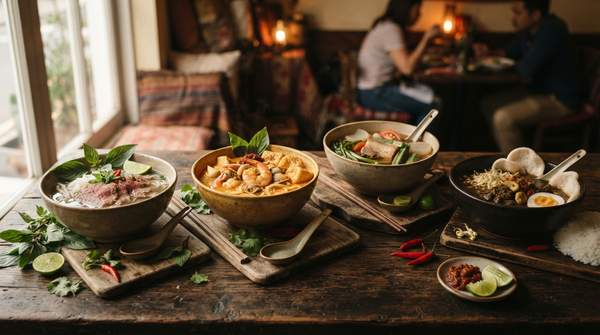
If you love the idea of Southeast Asian soup but freeze at the menu, here is the short answer: choose pho for a clear, aromatic, savory broth; laksa for something rich, creamy, and spicy; sinigang if sour is your favorite sensation; and rawon when you want deep, dark, earthy flavor unlike anything else. Each of these four bowls belongs to a different national tradition—Vietnam, Malaysia, the Philippines, and Indonesia—and each gets its personality from a distinct set of aromatics. This guide compares them side by side so you can pick the one that matches your taste.
Introduction to Southeast Asian Soups
What makes a Southeast Asian soup sing is balance. As culinary writer Chef Gary W Irvin II puts it, one spoonful can be "salty, sour, sweet, spicy, herbal, creamy, and savory all at once," and that balance comes from ingredients that each do a very specific job. Lemongrass lifts, fish sauce deepens, chilies burn, and souring agents brighten.
That shared logic is why these four soups can look like cousins on a menu yet taste completely different. The same region that perfumes a delicate Vietnamese broth with star anise also ferments a toxic black nut into the earthy heart of an Indonesian soup. Understanding which ingredient drives which flavor is the key to ordering—or cooking—the right bowl.
The Aromatic Building Blocks of Flavor
A few workhorse ingredients appear across the region's soups, and knowing them makes every recipe easier to read. Lemongrass, Irvin explains, has a bright lemon-lime aroma but tastes softer and more floral than lemon juice; simmered in broth, it makes a soup feel fresh and clean, and it pairs especially well with seafood, chicken, mushrooms, and coconut milk.
Galangal looks like ginger but behaves differently, bringing what Irvin describes as a peppery, pine-like warmth. Coconut milk changes a soup's whole texture: it adds rich body and softens chile heat so spicy soups taste rounded rather than harsh. On the sour side, tamarind and other unripe fruits and citrus provide the sharpness that defines Filipino sinigang. And then there is the outlier: buah kluwek, the Indonesian black nut that gives rawon its color and character. Once these building blocks feel familiar, Irvin notes, dishes like laksa, pho, and sinigang become much easier to understand and adapt.
Vietnamese Pho: Aromatic and Savory Comfort
Pho is the clear-broth benchmark of the group. Vietnamese pho relies on a fragrant broth, rice noodles, herbs, and protein, with beef versions often drawing on warm spices such as star anise, cinnamon, cloves, and coriander seed, while chicken pho is lighter and soothing.
The northern style takes that broth seriously. Hanoi-style pho, as food writer Craig Fear describes, emphasizes the beef broth made "the old-school way, slowly simmered with charred ginger, charred onion, and classic Pho spices, such as whole star anise, cinnamon, and cardamom." The TasteAtlas food encyclopedia's entry on the northern Vietnamese phở bò tái chín lists beef broth, bones, ginger, onions, fish sauce, sugar, anise, cloves, cinnamon, and rice noodles, with rare and well-done beef cooked by the hot broth as it is ladled over. Garnishes like bean sprouts, cilantro, Asian basil, and lime are served alongside so each diner seasons their own bowl.