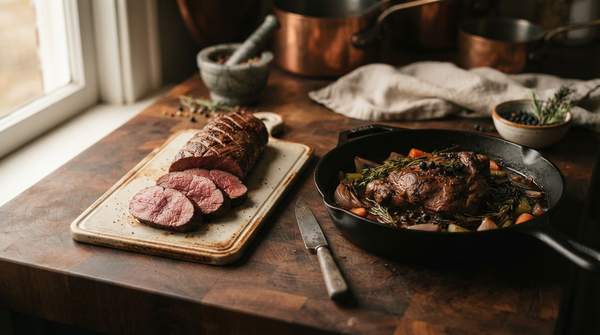
The single biggest reason venison disappoints at the table is a mismatch between the cut and the cooking method. A backstrap treated like a pot roast turns gray and dry; a shank thrown on a hot grill stays stubbornly chewy. The fix is simple once you can answer one question: is this cut tender or tough? Tender cuts want hot, fast cooking; working muscles want low, slow heat with moisture. Get that pairing right and venison rewards you with both tenderness and deep, distinctive flavor.
Understanding Venison Cuts: Tender vs. Tough
Venison divides into two families based on how the deer used each muscle. The tender cuts—backstraps, tenderloins, and sirloin—come from muscles that did little work, so they are naturally lean and soft with minimal connective tissue. The tenderloins sit inside the cavity of the deer and are recovered during gutting, as chef Hank Shaw notes, and they should never cook long.
The tough cuts—shanks, shoulders, and neck—are working muscles loaded with connective tissue and tough fibers. Shanks in particular are, in Shaw's words, "replete with tough sinew" and need hours of braising before they become tender. Neither category is better; they simply demand opposite treatments. A venison cut chart from Huntervale puts it plainly: "the tender cuts want hot and fast, the working muscles want low and slow, and getting it backwards is why some people think venison is tough."