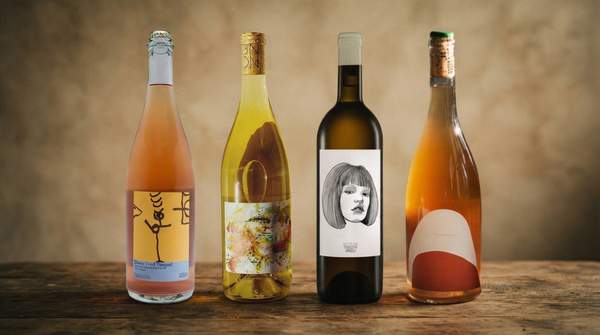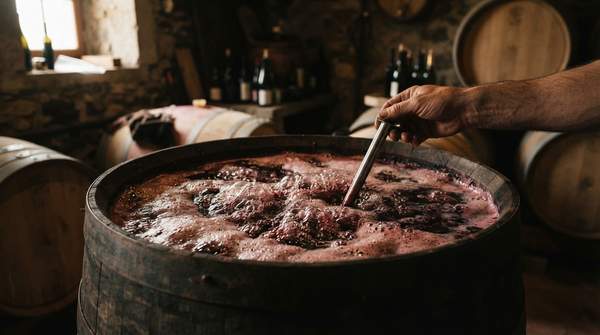
The distinctive aromas of many natural wines come from a relay of indigenous yeasts rather than a single cultured strain. Early in a wild fermentation, non-Saccharomyces yeasts such as Hanseniaspora dominate, shaping the wine's chemical profile before Saccharomyces cerevisiae—better able to tolerate rising alcohol—takes over and finishes the job. Each stage leaves behind different metabolic byproducts, and their combined effect is what gives wild-fermented wines their layered aromatic character.
The Unseen Architects of Wine Flavor: Indigenous Yeasts
Yeast's job in winemaking is to consume the sugars in grape juice and convert them into alcohol, carbon dioxide, and hundreds of aromatic compounds that contribute to a wine's flavor, texture, and aroma, as Virginia's Willowcroft Farm Vineyards explains in its discussion of native versus cultured fermentation. The superstar of the fermentation world is Saccharomyces cerevisiae, found throughout vineyards, cellars, and winery equipment, and the dominant player in both native and cultured fermentations.
But it does not work alone. Research on mixed yeast communities, published in the journal Microorganisms, notes that different species and strains of yeast impart distinct flavors and aromas to wine, suggesting that microbes may contribute to a wine's regional distinctiveness—its microbial terroir. Fermentation can proceed either with commercial yeast starters or with the spontaneous microbiota already present on the grapes and in the cellar.