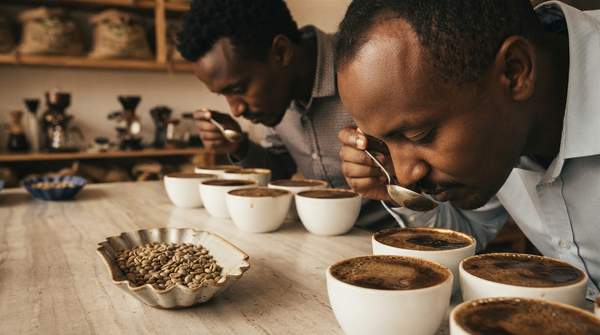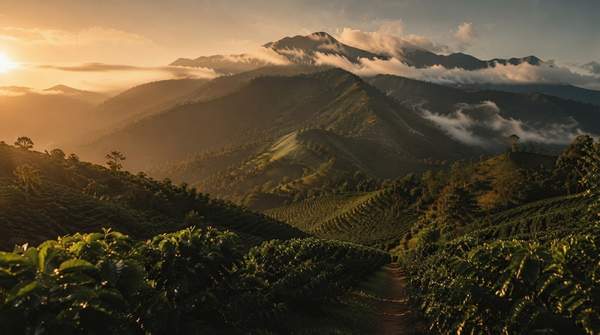
Coffee's most distinctive flavors are not created at the roastery—they begin in the ground where the tree grows. The combination of environmental conditions known as terroir, borrowed from the wine industry, describes how climate, soil, altitude, and sunlight exposure work together to shape the growth of the coffee plant and the development of its cherries. Understanding this connection explains why an Ethiopian coffee might burst with jasmine and blueberry notes while a Brazilian coffee leans toward chocolate, nuts, and caramel, as specialty roasters describe it. This article traces each factor's causal chain and compares the recognizable profiles of Africa and Latin America.
Understanding Coffee Terroir: The Foundation of Flavor
Terroir is the essence of what makes coffee diverse and worth exploring, in the words of Marco Suarez of Methodical Coffee. For coffee, it encompasses soil composition, altitude, climate, rainfall, and even the surrounding vegetation. These variables interact in complex ways, shaping the bean's development and its final flavor profile in the cup. The term, borrowed from the wine world, describes the distinctive set of environmental conditions that influence how coffee is grown and how it ultimately tastes. Far from being a single factor, terroir is a combination of elements working together—each one altering how quickly the cherry ripens, how dense the bean becomes, and which flavor precursors accumulate inside it.
Altitude's Ascent: How Elevation Shapes Acidity and Complexity
Altitude is the most frequently cited terroir factor in specialty coffee, and its mechanism is well understood. At higher elevations, cooler temperatures slow the rate at which the coffee fruit matures, giving the coffee more time to develop. This slower maturation can create a higher sugar concentration, an abundance of complex flavors, and dense coffee fruit, according to Josephine Walbank's account of terroir's effects. The result in the cup is a more nuanced, aromatic profile with brighter acidity. Altitude influences the bean's density and acidity directly, and higher altitudes tend to produce beans with more complex flavors. Conversely, some farms located at lower altitude along the equator may produce coffees that are more subtle and soft in flavor.
Climate's Embrace: Temperature and Rainfall's Role in Sweetness and Body
Climate—temperature, rainfall, and seasonality—plays a critical role in determining how quickly or slowly coffee cherries ripen. A stable, moderate climate with distinct wet and dry seasons tends to produce beans with more consistent and balanced flavors. Climate affects the development of sugars within the beans, which can enhance sweetness and body. The key is pacing: ideal conditions prevent rapid maturation, allowing sugars and acids to accumulate gradually, while fluctuations can stress the plant and disrupt that development. This is why two farms growing the same coffee at the same altitude can still produce noticeably different cups—the rhythm of rain and heat they experience differs.
Soil's Richness: Nutrient Contribution to Coffee Character
Soil is the quiet foundation of terroir. Soil composition provides essential nutrients that affect the growth and health of the coffee plants, and the specific mineral content of the soil can influence the coffee's final flavor profile. A healthy, well-nourished tree produces cherries capable of full flavor development; a stressed one cannot, regardless of how favorable the surrounding climate may be. While the sources agree on soil's importance, they describe its influence in general terms—nutrient supply and mineral content—rather than naming specific compounds. What is clear is that soil, altitude, and climate do not act independently: together, these factors create a unique flavor profile for each coffee-growing region, allowing enthusiasts to discern subtle differences between coffees from different terroirs.
The Terroir-Flavor Connection: An Explanatory Model
The table below traces the causal chain from each environmental condition to its physical effect on the coffee cherry, and then to the sensory result in the cup. Reading across each row, you can follow how a specific growing condition—like high altitude—leads directly to a common flavor note, like bright acidity.
| Terroir Factor | Effect on Bean Development | Resulting Flavor Characteristic |
|---|---|---|
| High altitude | Cooler temperatures slow cherry maturation, producing denser beans with more complex sugars and acids | Brighter acidity and more nuanced, complex flavors |
| Moderate climate (temperature and rainfall) | Stable conditions with distinct wet and dry seasons allow flavor precursors to develop fully; rapid maturation is prevented | Enhanced sweetness and body; consistent, balanced flavors |
| Rich soil composition | Essential nutrients support plant growth and health, shaping the bean's development | Mineral content influences the final flavor profile |
| African coffees (e.g., Ethiopia, Kenya) | Regional terroir supports slow fruit development in distinctive climates | Fruity and floral notes—jasmine, blueberry—with bright acidity |
| Latin American coffees (e.g., Brazil, Colombia) | Regional terroir produces a different balance of sugars and acids | Sweet, nutty, or chocolatey tones with mellow smoothness |
Note that the two regional rows are generalizations for macro-regions; they do not account for microclimate variations within a single farm or country.
Regional Signatures: Terroir in African and Latin American Coffees
The explanatory model becomes tangible when applied to real origins. African coffees are often characterized by fruit-forward profiles: Ethiopian coffees may burst with jasmine and blueberry notes, and Kenya's unique climate has helped some farmers produce beans with blueberry flavor notes, while Kenyan coffees more broadly show fruity and floral characteristics. Latin American coffees typically exhibit the opposite tendency—Brazilian beans lean toward chocolate, nuts, and caramel, with sweet, nutty tones and a mellow smoothness rather than lively acidity. As Marcus Clarke of Current Crop Roasting puts it, these patterns "aren't just roaster choices—they're rooted in the land." Coffee is grown between the Tropics of Cancer and Capricorn, a zone known as the bean belt, and within that belt each region's particular combination of altitude, climate, and soil produces its recognizable signature.
The Interplay of Terroir: A Holistic View of Coffee Quality
No single factor tells the whole story. A scientific review published on the question of whether coffee has terroir notes that a number of biochemical markers have been identified in coffee with different sensory profiles, and that environmental effects depend heavily on interactions with other variables in a given season—making broad, isolated conclusions difficult. In other words, high altitude alone does not guarantee a complex cup; its effect depends on the rainfall, temperature, and soil that accompany it. Terroir is best understood as an interaction: climate, soil, altitude, and sunlight exposure collectively shape both plant growth and bean development. Two caveats complete the picture: coffee varietals and post-harvest processing methods also shape flavor, but they sit outside this article's scope.
Navigating Coffee Choices with Terroir Knowledge
When selecting coffee, consider the origin's altitude, climate, and soil characteristics to anticipate its flavor profile. A bag from a high-altitude African region should lean fruity, floral, and bright; a Latin American single origin should lean sweet, nutty, and chocolatey. The measurable indicator that your understanding is working: the flavor notes described on coffee packaging or by a barista align with the expected characteristics of the coffee's growing region. When those labels match the terroir model—blueberry from Ethiopia, caramel from Brazil—you are no longer just drinking coffee; you are tasting the place it came from.
Sources
- What Is Terroir in Coffee? How Coffee Origin Affects Taste — Methodical Coffee
- Terroir Coffee: How Soil, Climate, and Altitude Impact Flavor - Forest Coffee
- Exploring Coffee Terroir: How Location Affects Flavor Profiles — Haiku Brew
- How does terroir affect the characteristics of coffee? — MTPak Coffee
- The Role of Altitude and Terroir in Coffee Flavor Development – Achilles Coffee Roasters — Achillescoffeeroasters
- Exploring Coffee Growing Regions: How Terroir Affects Flavor - Current Crop Roasting Shop
- Does Coffee Have Terroir and How Should It Be Assessed? - PMC